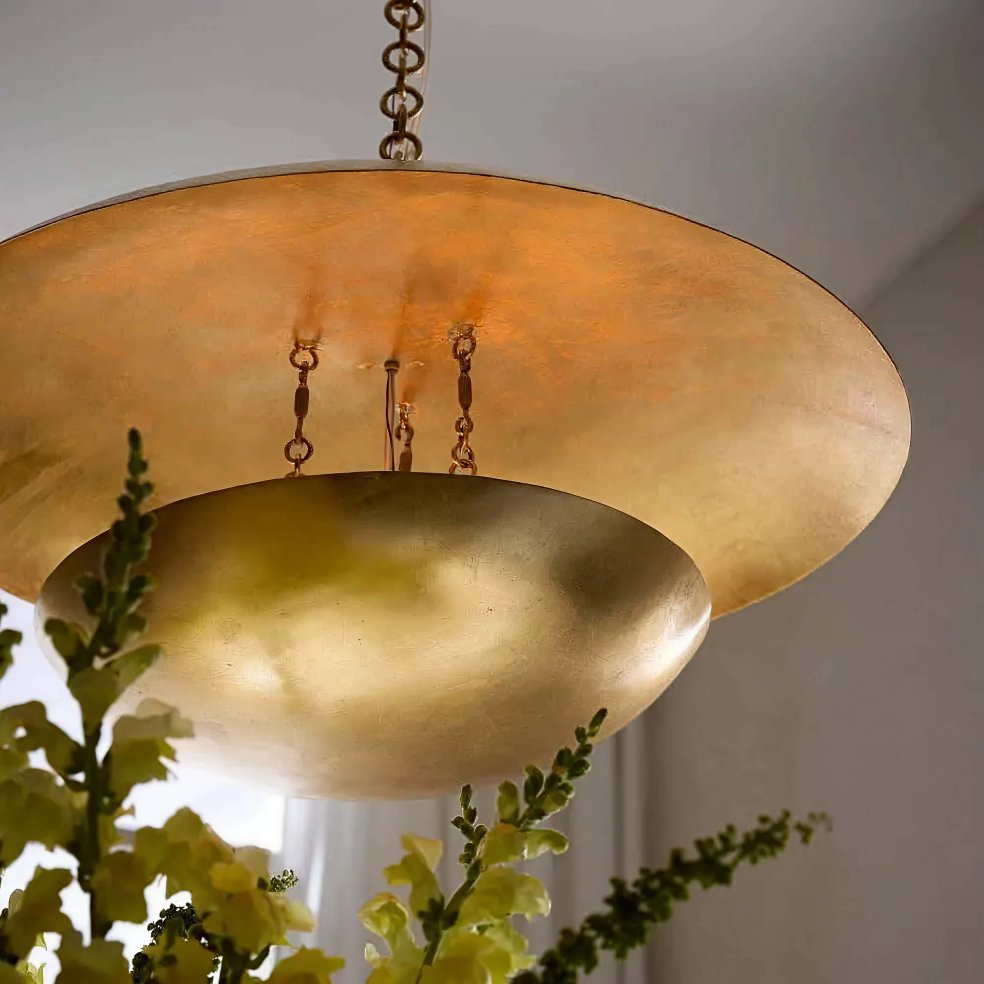
Design by @designsoftheinterior, Photo by @michaelakaskel
The bathroom vanity is where each day begins and ends, where you pull yourself together in the morning and unwind before sinking into bed at night. The quality of light you bring to the vanity shapes both of those rituals more than any other design decision in the room, so choosing clear, flattering light sources is key. From placement principles and sizing ratios to material choices and fixture styles, these bathroom lighting ideas for over the mirror can help you design a vanity that performs as beautifully as it looks.
Designing the Glow: Why Over-Mirror Lighting is Essential
Vanity lighting is one area of the home where function and atmosphere must perform equally well at the same time. The right fixture elevates the entire bathroom, turning a utilitarian space into one that feels personal and distinct.
Balancing Task Precision with Ambient Atmosphere
The vanity serves two simultaneous functions: a workspace that demands accurate, shadow-free illumination for grooming and a design moment that contributes to the room's overall atmosphere. These goals can feel at odds, as task lighting tends toward clinical brightness, while ambient lighting leans warm and diffused.
The key is layering. A well-designed vanity pairs a primary light source above or flanking the vanity mirror with secondary sources that soften the overall space. Think of the fixture above the mirror as the anchor, providing the functional core. Then, let the materiality of that fixture carry some of the atmospheric work. A shade in seedy glass, alabaster, or frosted opal will diffuse light warmly, while a more open or geometric form will throw pattern and shadow in ways that read as designed rather than accidental.
Dimmability is the other essential element here. A fixture that performs beautifully at full brightness for morning routines should be equally effective at a lower setting for an evening soak in the bathtub.
The "Shadow Gap": Avoiding Common Placement Mistakes
One of the most common over-mirror lighting mistakes is creating a shadow gap. This happens when a fixture is positioned too high above the mirror, casting light down onto the top of the head and leaving the face in shadow. The goal is to position your light source close enough to the mirror's face zone (roughly the upper third of the mirror) so that light reaches the face from an angle.
Fixtures mounted to the sides of the mirror, at eye level, are the gold standard for shadow-free illumination. They illuminate the face evenly from both sides, eliminating the lateral shadows that a single overhead source can create. When side placement is not possible or preferred, a fixture centered above the mirror and positioned at the right height also works well.
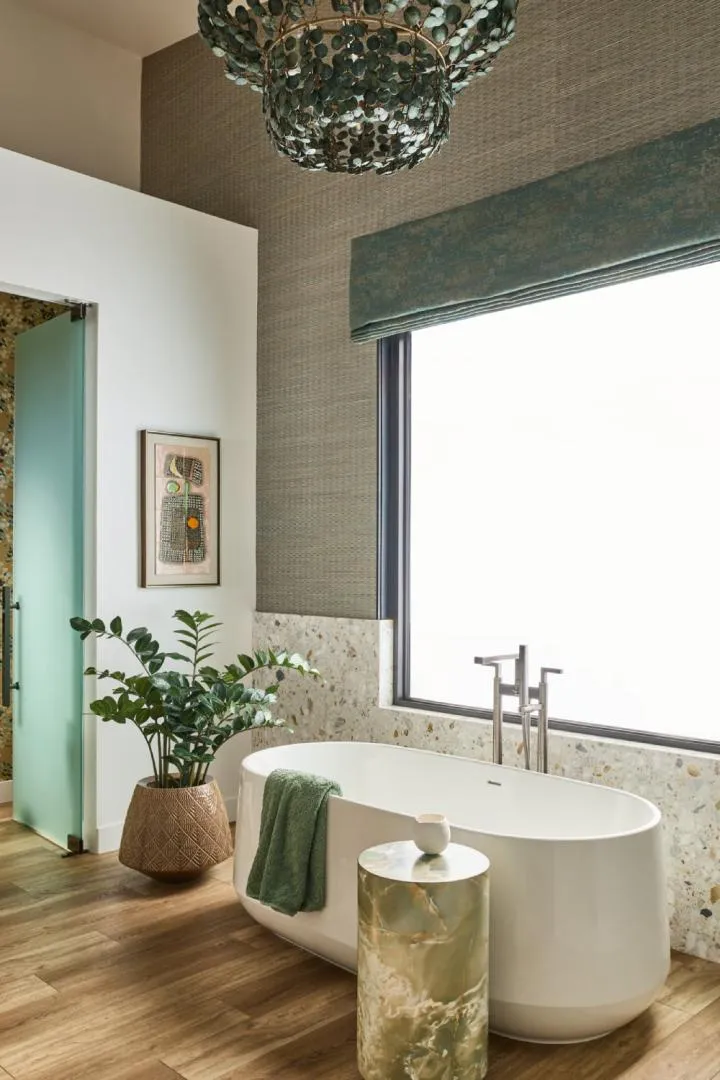
Design by @christopherkennedyinc, Photo by @johncwoodcock
Placement as Art: Where and How to Position Vanity Lighting
Even the most beautiful over-mirror bathroom lighting ideas will underperform if they’re installed at the wrong height, sized incorrectly for the mirror they serve, or treated as a singular solution in a space that calls for layered sources. Understanding the standards and knowing when to intentionally deviate from them is key.
Calculating the Golden Ratio: Light-to-Mirror Proportions
Designers often rely on the golden ratio, or breaking a space or vignette into one-third or two-third sections, to achieve visual harmony and proportion in a space. To apply this rule to modern bathroom lights over the mirror into practice, think of your mirror and light fixture as its own vignette. When centered at the top of the mirror, the light fixture’s width should either span one-third or two-thirds of the mirror’s width. This keeps the light source proportionally centered without bleeding past the edges of the reflective surface, which would cause unwanted light scatter into the room.
When using paired sconces flanking a mirror, the outer edges of the fixtures should align roughly with the outer edges of the mirror. This frames the mirror as an intentional composition and ensures the face receives cross-illumination from both sides.
The Ideal Height for a Flattering, Shadow-Free Glow
In general, mounting an over-mirror fixture 75 to 80 inches from the floor or 6 to 8 inches above the mirror will produce even illumination across the face. The goal is eye-level adjacency, not ceiling-adjacent placement.
For side-mounted sconces, center them at approximately 60 to 65 inches from the floor. This positions the light source at a height that distributes illumination across the face rather than above or below it.
Designing for Double Vanities: Symmetry vs. Singular Statements
Double vanities present a design choice that is fundamentally about intent. The symmetrical approach with matching fixtures centered above each sink and mirror produces a clean, balanced composition that works well in traditional and transitional bathrooms. The singular statement approach uses one continuous fixture, such as a linear bar or elongated sconce cluster, that spans the full width of both mirrors, resulting in a modern and architectural look. If your bathroom features shaker cabinetry, framed mirrors, or decorative hardware, symmetry will usually feel more natural. If it leans toward floating vanities, frameless mirrors, or minimal hardware, a single continuous fixture will feel more intentional. When in doubt, symmetry is the safer choice, as it's easier to execute well and less dependent on precise proportions.

Design by @clemons_danae, Photography by @aliharperphotography, Style Assist by @connienjack
15 Modern Bathroom Lighting Ideas Over Mirror
Theory only gets you so far. These bathroom mirror lighting ideas are each grounded in a particular aesthetic direction to help you find the best fit for your space and style.
1. Linear LED Art Bars: Seamless Architectural Glow
Linear LED lighting reads less like light fixtures and more like graphic elements. Look for fixtures with diffused lens covers that eliminate hotspots, and choose a finish that coordinates with the room's dominant metal.
Try: Simba wall sconce
2. Sculptural Sconces: Elevated Found-Object Style
When the fixture becomes the focal point, the mirror recedes into a supporting role and the bathroom reads as a curated interior rather than a utilitarian space. Sculptural vanity sconces reveal craft details that are usually reserved for objects rather than functional lighting.
Try: Itzia wall sconce
3. Statement Pendants: Vertical Framing for Mirrors
Hanging an eye-catching pendant above a mirror brings residential warmth to the bathroom. The drop adds verticality and a jewelry-like quality that reads especially well in bathrooms with high ceilings or a boutique hotel aesthetic.
Try: Edith pendant
4. Mixed Materiality: Hand-Forged Iron & Smoked Glass
The combination of blackened or forged iron with smoked glass is one of the most versatile material pairings in contemporary bathroom design. The iron provides structure and weight; the smoked glass softens the light to a warm, diffused glow that suits both modern and transitional spaces.
Try: Vivian wall sconce

Design by @pricehartdesign
5. Warm Brass & Bronze: Elevated Mid-Century Aesthetics
Warm enough to complement skin tones and rich enough to hold their own against stone and tile, brass and bronze remain among the most enduring finishes in bathroom design. In a mid-century modern bathroom, the fixture silhouette matters as much as the finish: look for clean arms, exposed hardware, and proportions that feel deliberate.
Try: Samuel wall sconce
6. Artisanal Glass: Ribbed, Seedy, and Opal Textures
Textured glass scatters illumination rather than directing it, producing a diffuse, flattering quality that is closer to natural light than any bare-bulb solution. Over-mirror bathroom lighting ideas built around artisanal glass feel collected rather than installed.
Try: Ova wall sconce
7. Backlit Elegance: Integrated Halo Lighting Effects
Backlit fixtures and integrated LEDs tucked behind diffusers or decorative elements create a halo effect that reads as ambient and architectural simultaneously. The fixture glows from behind, producing an even wash of illumination that flatters the mirror's reflective surface and adds depth to the wall around it.
Try: Zelda wall sconce
8. Matte Black: Modern Definition & High Contrast
Against white marble, light wood, or warm plaster walls, matte black lighting creates contrast that anchors the mirror as a composition. The finish's absence of reflectivity means it recedes in peripheral vision, making the light itself the visual focus.
Try: Glaze wall sconce
9. Organic Modernism: Alabaster and Natural Stone
A shade carved from alabaster filters light in a way no glass or ceramic can replicate, producing a honeyed, candlelit glow that makes every surface in its reach look more beautiful. In a luxury bathroom, alabaster over the vanity is the lighting equivalent of a stone countertop.
Try: Jenks wall sconce
10. Layered Luxury: Combining Bars with Recessed Accents
The most elevated vanity lighting approaches treat the mirror as just one node in a larger lighting system. A primary bar or sconce above the mirror provides task illumination, while recessed downlights positioned above or beside the vanity add fill light that softens shadows from below and brightens the overall zone.
Try: Upson wall sconce

Design and styling: by @susienovakinteriors, Photography by @rbradleyphoto
11. Mercury Glass: Antiqued Depth for Modern Spaces
The subtle mottling of its mercury glass catches light from multiple angles, creating a depth that shifts as you move around the room. In a modern bathroom, mercury glass reads as both old-world and contemporary, depending entirely on the fixture form it inhabits.
Try: Adriel wall sconce
12. Industrial Refinement: Mesh and Perforated Details
Industrial doesn't mean rough. At its most considered, the aesthetic brings precision to materials such as perforated metals, exposed hardware, and machined details. Over a vanity mirror, an industrial-influenced fixture adds structure and specificity to a space that might otherwise feel generic.
Try: Nox wall sconce
13. Geometric Silhouettes: Bold Shapes for Vanity Anchoring
A fixture built around a strong geometric form turns the vanity into a deliberate composition. Hexagons, diamonds, angular brackets, and asymmetric frames read as architecture rather than decoration and work best in spaces where the rest of the design language supports their precision.
Try: Riri wall sconce
14. Tapered Glass Flutes: Verticality for Narrow Mirrors
Tall, narrow mirrors call for vertically oriented lighting solutions that complement their proportions. A tapered glass flute echoes the mirror's verticality and produces a column of diffused light that illuminates the face more evenly than a wide horizontal bar would in the same space.
Try: Norwalk wall sconce
15. Articulated Arms: Adjustable Task-Focused Lighting
An articulated arm sconce allows the light source to be repositioned toward the mirror, angled at the face, or directed upward to bounce light off a ceiling, giving a single fixture the flexibility of three. For a design-savvy buyer who uses the vanity for tasks that demand precise illumination, an adjustable arm is a functional upgrade that also reads as considered and modern.
Try: Mercury wall sconce

Design by @shelley.cekirge, Photo & stone by @artistic_tile
Choosing Bathroom Mirror Lighting with a Professional Eye
The technical specifications behind a vanity light determine how accurately it renders color, how well it performs across tasks, and whether it is safe to use in a wet environment. These decisions are worth making carefully.
Understanding Lumens and the Importance of Dimmability
Lumens, the measure of total light output, should be considered in relation to the size of the vanity space. A small powder room may only need 500 to 800 lumens from the vanity fixture, while a primary bathroom with a large mirror and dark finishes may call for 1,200 to 2,000 lumens or more. The goal is sufficient illumination at mid-range dimmer settings, preserving headroom to adjust up for task work or down for ambient use.
Dimmability transforms a bathroom from a single-setting space into one that is responsive to time of day and mood. Always confirm that the fixture and dimmer switch are compatible; LED fixtures in particular require dimmer models rated for LED loads to avoid flickering at low settings.
Why CRI is Non-Negotiable for Vanity Tasks
Color Rendering Index, or CRI, measures how accurately a light source renders colors compared to natural daylight. On a scale of 0 to 100, a CRI of 90 or above is the standard for professional grooming environments. Fixtures with lower CRI ratings render skin tones and clothing colors inaccurately, which means that what looks correct at the vanity mirror may read differently in natural light outside. For any fixture positioned above or beside a mirror, a CRI of 90 to 95 is the target.
Color Temperature: From Refreshing 3000K to Warm 2700K Glows
Color temperature, measured in Kelvins, determines whether a light source reads as crisp and clear or warm and amber. For vanity lighting, the range of 2700K to 3000K covers the full spectrum of what works well.
At 2700K, light has a warm candlelit quality that is flattering for ambient atmosphere and evening use. At 3000K, the light is slightly cooler, closer to a warm white that accurately renders colors and supports precision grooming tasks without feeling clinical. Many designers split the difference and specify fixtures in the 2800K range, or choose fixtures with tunable white technology that allows color temperature to shift based on time of day.
Safety & Compliance: Damp-Rated vs. Wet-Rated Fixtures
Bathroom lighting is governed by specific safety standards that determine where a fixture can be installed relative to a water source. Damp-rated fixtures are safe for use in areas with humidity and indirect moisture exposure. Wet-rated fixtures are required for areas of direct water exposure, such as inside a shower enclosure or directly above a freestanding tub without protection.
For most bathroom mirror lighting ideas, damp-rated fixtures are appropriate.

Design by @andreawestdesign, Photo by @andreawestdesign
Materiality and Finish: Creating a Cohesive Design Story
A vanity fixture is in constant visual conversation with the rest of the bathroom fixtures and accents. A fixture chosen without reference to elements such as the faucet hardware, the tile, the cabinetry pulls, and the room’s flushmount lighting will always feel slightly out of place, regardless of how beautiful it is on its own.
The Art of Mixing Metals: Coordinating Sconces with Hardware
The key to nailing a mixed-metal look is by establishing a clear hierarchy. One dominant finish should appear in the largest or most prominent pieces (cabinetry hardware, faucets, towel bars) and one secondary finish should serve as an accent that ties back to the primary. The lighting fixture can occupy either role, but it should connect to at least one other element in the space to feel intentional.
Letting Texture Lead: From Hammered Metals to Fluted Glass
Light fixtures with texture contribute ambient interest to the overall space. A hand-hammered brass backplate catches light differently at every angle; a fluted or ribbed glass shade casts a subtle grid of pattern on the wall behind it. These micro-details reward close inspection and make a vanity wall feel layered even when the fixture itself is relatively simple in form.
When other surfaces in the bathroom are polished (marble, chrome, glazed tile) a textured fixture adds the visual relief that keeps the space from reading as flat. When the bathroom is built around natural, matte, or rough-hewn materials, a smooth, polished fixture provides the contrast that makes those surfaces more interesting by comparison.
Protecting the Investment: Choosing Finishes for High-Moisture Environments
Bathrooms are hard on finishes. Humidity, condensation, cleaning products, and everyday moisture exposure take a toll on materials that would hold up in a living room or dining room. When selecting a vanity fixture, prioritize finishes that are specified for damp environments or treated with protective coatings.
Lacquered brass, patinated iron sealed with a clear coat, and powder-coated steel are among the most resilient options for bathroom use. Unprotected metals, particularly those with a raw or reactive surface finish, may require more care to maintain their appearance over time.
FAQs About Bathroom Lights Over Mirror
Is It Better to Have Lights Above or on the Side of the Mirror?
Both side-mounted and above-mirror placements work well. The key to flattering, shadow-free illumination is choosing the right size fixture and positioning it at the right height.
How Many Inches Should a Vanity Light Be From the Mirror?
As a general rule of thumb, position a fixture 6 to 8 inches above the mirror's top edge, or roughly 75 to 80 inches from the finished floor for optimal face-level illumination.
Can I Use a Regular Wall Sconce Above a Bathroom Mirror?
Yes, provided it is damp-rated for bathroom use. Confirm the fixture's safety rating before installation, as standard interior sconces lack the moisture protection required for bathroom environments.