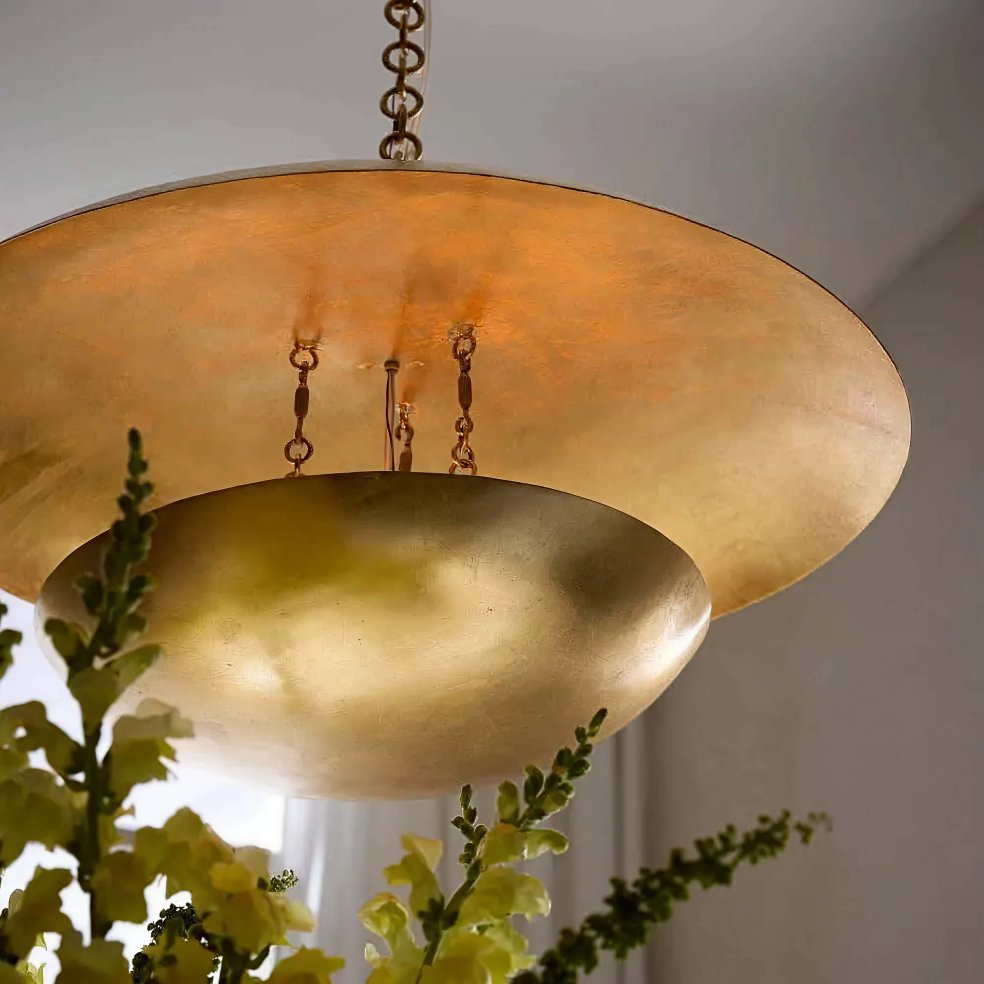
Design: @MaryBledsoeDesign
Photography: @garrettrowlandphotography
Of all the tools available to a designer, light is uniquely transformative. More than a utilitarian necessity, high-end lighting shapes how a room feels, how color reads, how materials reveal themselves, and how people move through and inhabit a space.
Whether you're building a home from the ground up or reviving an existing room, understanding the different types of lighting will help you create a space that functions as beautifully as it looks.
The Four Main Types of Lighting
Every well-layered interior draws from four foundational lighting types. Each serves a distinct purpose, and understanding how they differ is the first step toward using them with intention.
|
Lighting Type |
Primary Purpose |
Common Fixtures |
Typical Placement |
|
Ambient |
Overall illumination; sets base level of light in a room |
Chandeliers, flush mounts, recessed lights |
Ceiling-centered or perimeter |
|
Task |
Focused light for specific activities |
Pendants, table lamps, under-cabinet strips |
Work surfaces, reading areas, vanities |
|
Accent |
Directional light to highlight objects or architecture |
Sconces, track lighting, picture lights |
Walls, shelving, artwork |
|
Decorative |
Visual interest; the fixture itself is the statement |
Sculptural pendants, table lamps, floor lamps |
Anywhere a focal point is desired |
Ambient Lighting

Design: Tracery Interiors
Think of ambient lighting as the equivalent of natural daylight indoors. As the foundational layer of illumination, ambient fixtures provide even, broad lighting that makes a room navigable and livable.
In most rooms, ambient lighting comes from overhead fixtures positioned at or near the ceiling, whether that's a chandelier over a dining table or a semi-flush mount fixture in a bedroom.
Designers often distribute ambient light across multiple sources to create dimension and depth. They also rely on dimmability, as an ambient light at 30 percent reads differently than the same fixture at full output.
Task Lighting

Design: @Thesistersnco
Photography: Scott Johnson
Task lighting is light calibrated for a specific activity. Reading, cooking, writing, grooming, and working at a desk all require a higher level of focused illumination than ambient sources typically provide. The goal is to eliminate shadow and eye strain without flooding the entire room with brightness.
In a kitchen, task lighting lives under cabinets and above islands. At a bathroom vanity, it flanks the mirror rather than coming from overhead. The best task lighting is adjustable in both direction and intensity, and always paired with ambient sources so transitions between lit and unlit areas feel gradual.
Accent Lighting

Design: @dgi_designbuild
Construction: @savane_design_build
Accent lighting draws the eye toward something specific, such as a piece of art, a textured wall, an architectural detail, or a curated shelf. It typically delivers two to three times the light level of surrounding ambient sources, creating contrast and visual hierarchy within a room.
In high-end interiors, accent lighting is often what gives a room its sense of depth and curation. Directional by design, accent fixtures (including wall sconces and gallery lights) are a strategic way to spotlight a room’s details.
Decorative Lighting

Design: @mayaaxtinteriors
Photography: @lifecreated
Decorative lighting’s primary purpose is aesthetic rather than functional. Whether it’s a sculptural table lamp with a hand-turned ceramic base, a floor lamp with an articulated brass arm, or a pendant in hand-blown amber glass, decorative pieces are objects first, light sources second. Their contribution to a room is visual punctuation, the equivalent of a well-chosen piece of sculpture.
Decorative fixtures can and often do provide meaningful ambient or task light as a secondary function. But when a fixture is chosen because of what it looks like rather than how much light it puts out, it’s considered decorative.
How to Layer Different Types of Lighting
Layering light sources is the key to creating inviting spaces that flatter skin tones and evoke a mood or feeling. Here's how designers approach the foundational principle.
Why Layering Matters in a Luxury Interior
A single overhead fixture, no matter how beautiful, leaves a room looking flat and one dimensional. Layering introduces depth, contrast, and the ability to shift a room's atmosphere on demand.
A dining room with only a chandelier is locked into one mood, while the same room with a chandelier, flanking sconces, and a credenza lamp can shift from bright and convivial at dinner to low and atmospheric over dessert.
Combining Ambient, Task, and Accent Light
To create a layered lighting scheme, identify the primary ambient source first, then build out from there. Once you’ve established the base layer of illumination, add task sources at points of activity followed by accent fixtures aimed at the room’s focal elements. Finally, add extra elements of visual interest with a decorative fixture or two.
For custom control of the light layers, make sure the different lighting types operate on separate circuits wherever possible. Ambient lighting can be dimmed to 20 percent while accent lighting stays at full output, creating a dramatically different atmosphere from the same set of fixtures.
How Natural Light Fits Into the Layering Plan
Natural light is a dynamic layer that shifts across the course of a day and across seasons. Designers build artificial lighting plans around it, using warm-toned fixtures to complement morning light and dimmer-controlled ambient layers that rise as daylight fades.
Window placement, sheer treatments, and reflective surfaces all affect how natural is distributed through a room, which in turn affects how much artificial light is needed and from where.

Different Kinds of Lighting Fixtures
A fixture’s form determines how the light it emits behaves in a room. Each of these different kinds of lighting serves its own purpose.
Chandeliers
Chandeliers are multi-light fixtures suspended from the ceiling, traditionally featuring branching arms or candelabra sockets. In contemporary design, the category has expanded to include linear forms, sculptural abstractions, and oversized statement pieces that anchor a room's composition. They function primarily as ambient sources but simultaneously serve as a decorative focal point.
Pendants
Pendants are single suspended fixtures that hang from a cord, rod, or chain. Their graphic quality makes them among the most versatile fixtures in a designer's toolkit: a single large pendant reads as a focal point above a kitchen island, while a cluster of three over a dining table delivers the visual presence of a chandelier with a lighter, more editorial quality.
Wall Sconces
Wall sconces are among the most versatile fixtures in a layered lighting plan. Mounted on the wall rather than the ceiling, they provide ambient, accent, or decorative light depending on their shade type, bulb direction, and placement.
Sconces flanking a bathroom mirror provide task illumination; directed upward beside a fireplace, the same fixture acts as an accent. Wall sconces are also available in a range of sculptural silhouettes, adding an artistic touch to any interior.

Design: @level5designs
Photography: @saracoffinphoto
Recessed and Architectural Lighting
Recessed fixtures sit flush with the ceiling, making them the least visually intrusive ambient source available. When placed thoughtfully across a ceiling grid or along a room's perimeter, recessed lighting provides clean illumination that lets other fixtures claim the visual attention. Architectural lighting also encompasses cove lighting and concealed linear LED strips built into millwork or ceiling coffers.
Floor and Table Lamps
Floor lamps and table lamps are often used as decorative lighting, though both can contribute meaningful ambient or task illumination depending on their shade opacity and position. In living rooms and bedrooms, pairs of matching table lamps create balance and warmth at eye level, where ceiling sources rarely reach.
Track and Linear Lighting
Track heads can be repositioned and reoriented along a mounted rail, making them useful in gallery-style spaces or rooms where art placement changes over time. A linear fixture, suspended horizontally from a single canopy, is a natural fit over a long rectangular dining table or kitchen island, where its elongated silhouette echoes the surface below.
Types of Lights for Your Home, Room by Room
Whether you're layering a living room or finishing a primary suite, the distinct types of lights for the home bring something different to the space they inhabit. Here's how the four lighting categories translate across the most common residential spaces.
Living Room
The most layered room in the home, the living room is a space for conversation, reading, entertaining, and quiet evenings alike. Ambient light should be warm and dimmable, supplemented by task sources at reading areas, accent lighting on art and shelving, and decorative fixtures that add warmth at eye level.
Kitchen
Kitchens balance two competing demands: bright, focused light for prep and cooking, and a warmer, more ambient quality when the space shifts into entertaining mode. Kitchen island pendants serve both roles at once, functioning as task lighting during meal prep and a design statement when guests gather around.
Dining Room
A well-chosen chandelier or pendant establishes the room's character and creates an inviting ambience that makes a meal feel like an occasion. To add depth and dimension, supplement the primary overhead source with sconces on flanking walls and lamps on a sideboard.
When searching for modern dining room lighting ideas and hanging dining room lighting ideas, keep scale and drop height in mind. A fixture that's too small reads as tentative, and one hung too high loses the intimacy that makes a dining room feel like a destination.
Bedroom
For rooms with ample ceiling height, there are a wide range of bedroom chandelier ideas that add sculptural form to the space and draw the eye upward. But the bedroom’s lighting plan shouldn’t stop at the ceiling. When the overhead fixtures are turned off, bedside sconces or table lamps offer just enough directed light for reading without disturbing a partner.
Bathroom
For flattering vanity lighting, mirror-flanking sconces mounted at eye level are essential. Ambient lighting from recessed ceiling fixtures covers the overall space, and in larger bathrooms, accent or decorative lighting near a soaking tub creates a secondary atmosphere distinct from the task-lit mirror area.

Design: @toddprincedesign
Home Office and Hallways
Home offices require strong task lighting above the desk surface, supplemented by ambient light that reduces screen contrast and eye strain. Hallways benefit from sconces mounted at regular intervals, providing functional illumination and a sense of architectural rhythm.
How Material and Finish Shape the Light
A fixture's material determines how light moves through it and into the room. Alabaster transmits light from within, producing a warm, candlelit glow, while polished brass bounces it outward, adding brightness and perceived volume to a space. Material is as important to consider as fixture type or placement.
Brass, Bronze, and Blackened Metals
Polished brass and chrome bounce light outward, making a room feel brighter. Antique brass and warm bronze redirect light in warm tones that complement incandescent and warm-white LED sources. Blackened iron directs light from the socket with minimal diffusion, creating focused output and stronger contrast between lit and unlit areas.
Alabaster, Plaster, and Stone
Alabaster transmits light rather than reflecting it, producing a warm, luminous glow that mimics candlelight. The natural veining in each stone means no two fixtures produce identical light. Plaster shades behave similarly, diffusing light softly and adding a matte, architectural quality to the fixture's form.
Glass, Crystal, and Resin
Mouth-blown seedy glass scatters light with a soft, organic quality, while smoked and tinted versions filter output and deepen color temperature. For something more dramatic, crystal refracts light into prismatic patterns across surrounding surfaces. Resin, ranging from nearly transparent to fully opaque, offers the most flexibility in how a fixture shapes and distributes light.
Why Finish Choice Affects Atmosphere
The same fixture in two different finishes can produce different atmospheric results. An antique brass chandelier with amber glass shades creates warmth and intimacy, while the identical silhouette in matte black with clear glass reads as modern and high-contrast. Finish choices are how designers control the mood and atmosphere that different lighting brings to a space.
Lighting Specifications Designers Always Consider
Understanding the technical side of lighting helps you evaluate fixtures beyond aesthetics, so your lighting performs as beautifully as it looks.
Lumens vs Watts
Watts measure energy consumption; lumens measure light output. A 10-watt LED can produce the same lumen output as a 60-watt incandescent. A typical living room benefits from 1,500 to 3,000 lumens of ambient light; a dining room usually performs well in the 2,000 to 3,000 lumen range at mid-dimmer settings.
Color Temperature and Mood
Measured in Kelvin (K), color temperature describes the warmth or coolness of a light source. The 2,700K to 3,000K range produces warm, amber-toned light suited to living rooms, dining rooms, and bedrooms. The 3,500K to 4,000K range delivers a neutral white better suited to kitchens and offices.
CRI and Color Accuracy
Color Rendering Index measures how accurately a light source renders colors relative to natural daylight. A CRI of 90 or above is ideal for residential use, where fabrics, finishes, artwork, and skin tones all read more accurately under high-CRI sources.
Dimming and Light Control
The ability to calibrate output to time of day and occasion is what makes a layered plan feel custom. Confirm that both the fixture and its intended bulb are dimmer-compatible before purchasing, as incompatible pairings often produce flickering or limited range.
Wet-Rated Lighting for Bathrooms and Outdoor Spaces
Damp-rated fixtures handle humidity, making them appropriate for bathrooms and covered outdoor spaces. Wet-rated fixtures are built for direct water exposure and work best on open porches and exterior walls.
Bringing Different Lighting Types Together in Your Home
A home with well-designed lighting feels effortless, even if meticulous planning went into it. The goal of understanding the different types of lights is knowing which combination serves each space's function and atmosphere, not deploying every category in every room.
Start with ambient to establish the base layer, then add task sources at the points of activity, accent fixtures at the room's focal elements, and decorative fixtures wherever personality and warmth are needed.
The rooms that feel most alive treat light as a material in itself: considered, layered, and calibrated with the same care as every other design decision. What are the different types of lighting? Ultimately, they are the tools that allow a space to feel as intentional at 7 p.m. as it does at noon.
FAQs About Different Types of Lighting
What Are the Four Main Types of Lighting?
The four types are ambient (overall illumination), task (focused activity light), accent (directional highlight light), and decorative (fixtures chosen primarily for visual impact). Most well-designed rooms incorporate all four.
What Is the Difference Between Ambient and Accent Lighting?
Ambient lighting provides even illumination across a room. Accent lighting is directional and focused, delivering more light to a specific surface, object, or architectural feature than the surrounding environment.
How Many Lights Should Each Room Have?
There's no fixed number. The right count depends on room size, ceiling height, and the activities the room supports.
What Color Temperature Works Best for Living Spaces?
The 2,700K to 3,000K range is ideal for most living spaces. It produces warm, flattering light that reads well against wood tones, textiles, and warm-painted walls.
How Do Designers Choose Lighting for a Luxury Interior?
Designers evaluate fixture scale, material quality, finish, light output, and dimmability alongside pure aesthetics. A fixture must perform technically and look intentional within the broader design scheme.