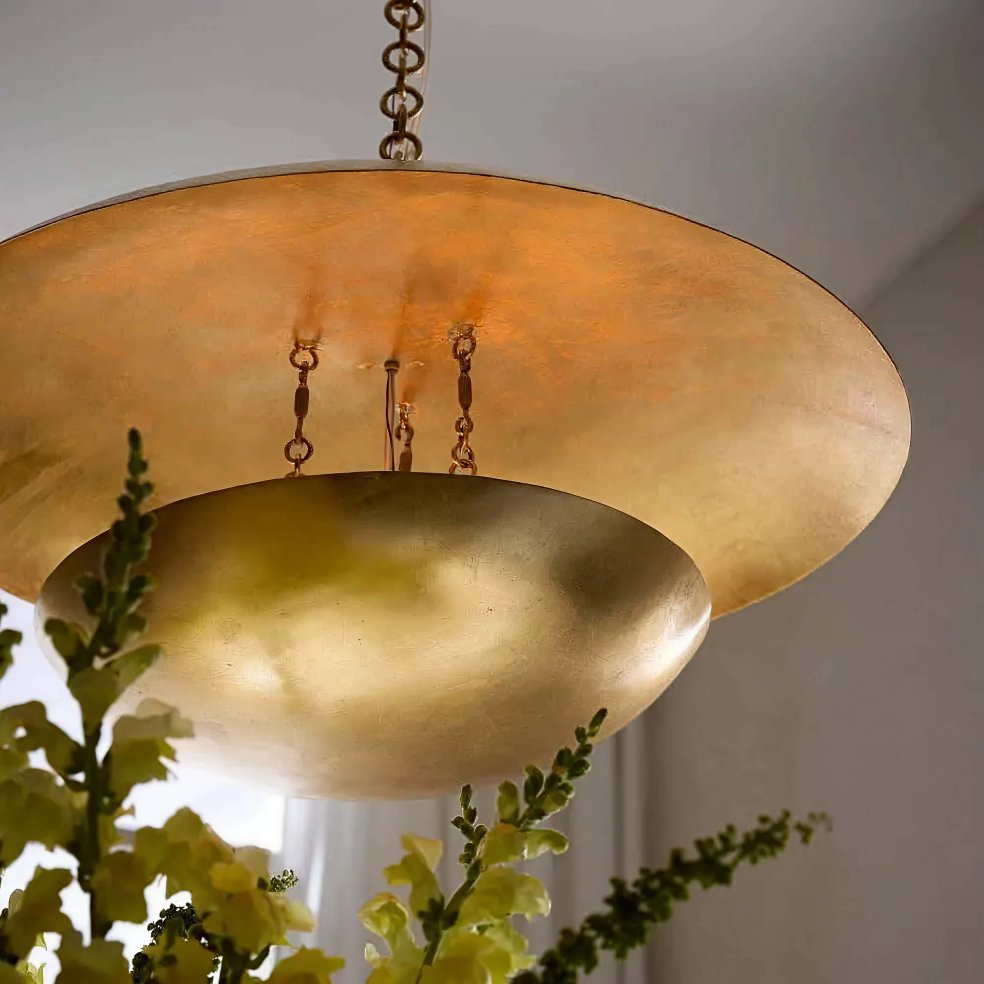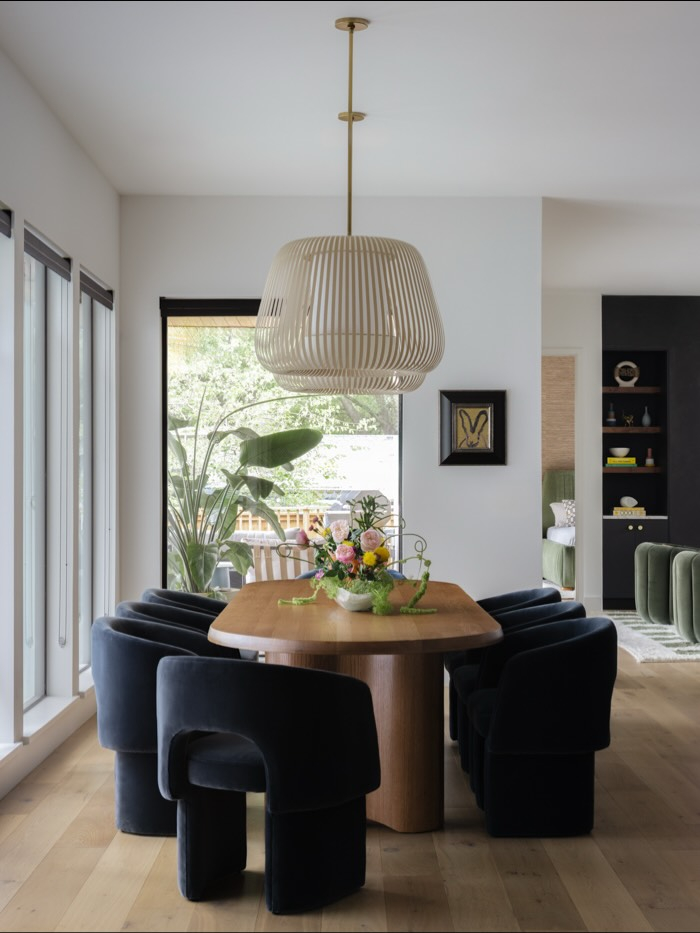
Interior Design: @jfisherinteriors
Photography: @mollyculverphotography
Styled by: @jfisherinteriors
Whether you're hosting an event or sitting down for a quiet weeknight dinner, dining room lighting does something no other design element can quite replicate. Lighting is the invisible host at every meal, shaping how guests feel, how long they linger, and how the whole room reads. Choosing the right fixtures for your style and space is one of the most defining choices in the room, and it starts with understanding what to look for and why it matters. Then, get inspired with dozens of dining room lighting ideas that suit every style.
How to Choose the Right Dining Room Lighting
Selecting dining room lighting is both technical and intuitive. The best fixtures work within the physical constraints of your space, complement your home’s existing architecture and furnishings, and carry a visual weight that feels intentional rather than incidental. So before you fall in love with any dining room light ideas, it’s important to run through a few key considerations.
Consider Room Size, Table Shape, & Ceiling Height
A low ceiling in a compact breakfast nook calls for a completely different lighting solution than a vaulted great room with a 12-foot drop. Follow these steps to find the right fit:
- Start by measuring your ceiling height. Standard residential ceilings run 8 to 9 feet; anything below that will require a semi-flush or flush mount to maintain comfortable clearance. Ceilings 10 feet and above typically have enough vertical room for a pendant or chandelier.
- Table shape is your next guiding factor. When in doubt, create visual continuity by matching your lighting shape to your table shape. Radial fixtures naturally complement round tables, while rectangular tables invite linear chandeliers or a series of pendants placed in a row. Oval tables can go either way, though longer oval tables often benefit from elongated linear silhouettes.
- Room width matters too. A common guideline is to add the room's length and width in feet, then convert that number to inches for an approximate chandelier diameter. So, a 12x14-foot dining room would suggest a fixture somewhere around 26 inches in diameter. Keep that number in mind as a starting point; you can go larger in rooms with strong architectural presence or high ceilings.
Fixture Profiles: Pendants, Chandeliers & Flush Mounts
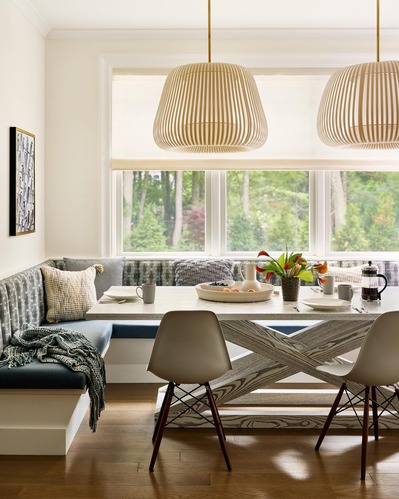
Dining room lighting typically falls into three main fixture forms, each with its own silhouette, hanging profile, and ideal use case.
- Suspended from a cord, rod, or chain, pendants are single hanging fixtures that tend to read more graphic and modern. A cluster of three pendants over a round table can create the same visual presence as a chandelier while feeling lighter and more editorial.
- Chandeliers are multi-light fixtures with branching arms, shades, or candelabra-style sockets and work best in rooms with generous ceiling height. Though commonly associated with a traditional style profile, chandeliers have evolved in contemporary design, ranging from linear silhouettes to oversized and abstract forms.
- The workhorses of low clearance space, flush mounts, and semi-flush mounts hug the ceiling. High-quality versions combine function and beauty, especially when crafted in luxury materials like handblown glass, ceramic, or patinated metals.
- Linear suspensions bridge the gap between chandelier and pendant. Mounted on a single canopy, they extend horizontally and work well over a long rectangular dining table.
When it comes to kitchen table lighting ideas, hanging multiple chandeliers or pendants in a row above an elongated table creates a dramatic, layered look. This approach works beautifully in both formal and casual dining spaces: a trio of drum shades feels relaxed and organic, while a pair of matching chandeliers reads as refined and elegant.
How Materiality Impacts Ambiance
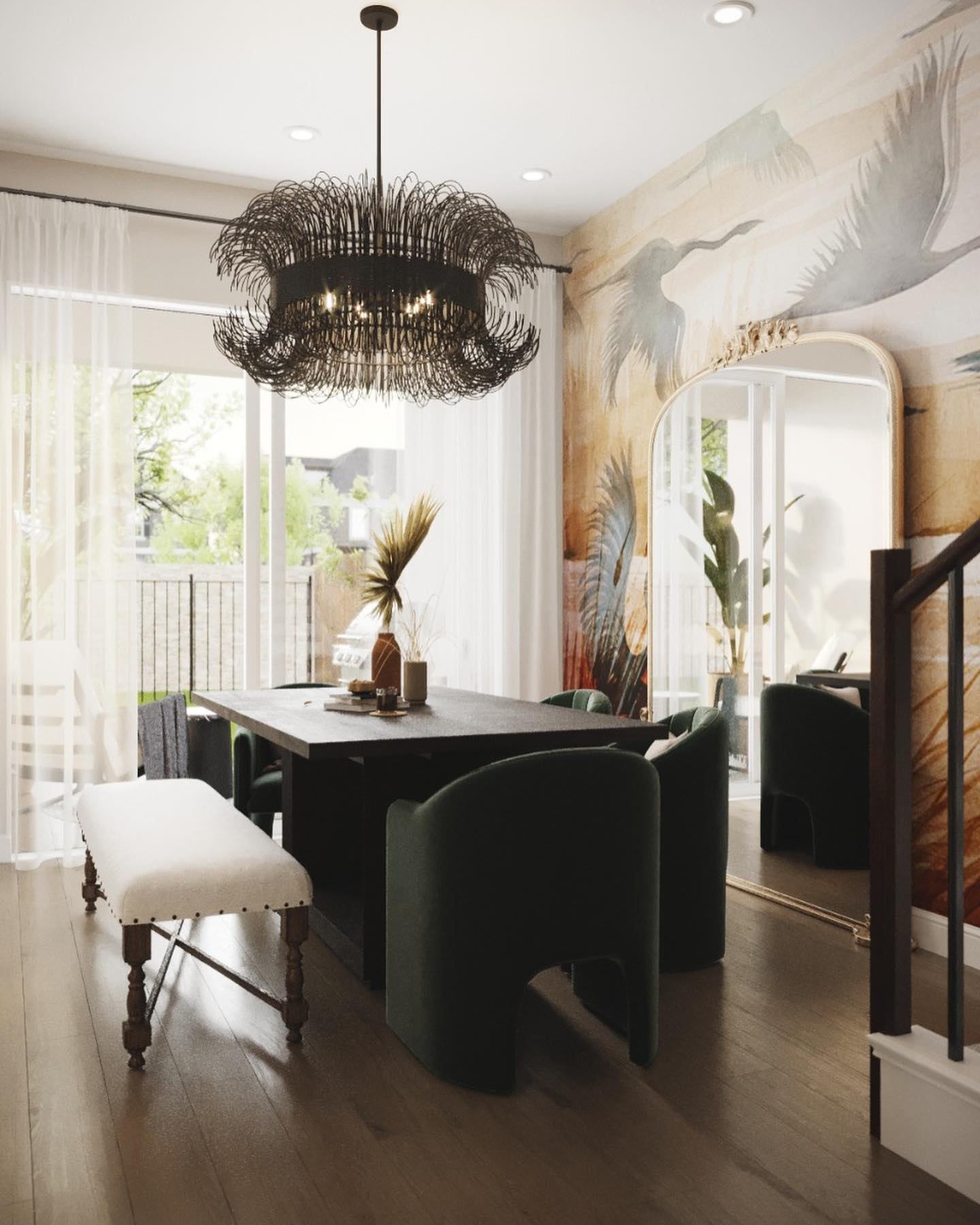
Designer: @ksamoneco
Visuals: @boiko_vis
A fixture’s material determines how light moves through and around it, shaping the entire feeling of a room. Alabaster, seedy glass, and linen shades belong to the soft-light category: hold one up to a bulb, and you get a warm-colored glow that mimics candlelight.
For a moodier contrast, blackened iron, ceramic, and solid brass focus light in specific directions. Reflective materials like polished brass, neutrals, and chrome play bounc light around a space, making a small dining room feel bigger. Natural materials: rattan, woven fiber, and raw wood filter light in a way that feels textured and atmospheric.
Which Fixture Fits My Style?
| Style | Best Fixture Type | Preferred Materials | Finish Direction |
|---|---|---|---|
| Modern | Linear suspension, geometric pendant | Steel, frosted glass, lacquer | Matte black, brushed nickel, satin brass |
| Transitional | Drum pendant, streamlined chandelier | Alabaster, linen, mixed metals | Antique brass, warm bronze, soft white |
| Rustic | Radial chandelier, ceramic pendant | Wood, iron, reactive glaze | Hand-distressed, natural, raw |
| Industrial | Forged iron, perforated metal pendant | Steel, glass, machined brass | Raw iron, aged brass, smoked glass |
| Coastal | Woven dome, bead chandelier | Rattan, shell, seedy glass | Natural, whitewash, sea glass tones |
| Glam/Statement | Oversized sculptural chandelier | Crystal, acrylic, mirrored brass | High polish, gold, chrome |
Matching Lighting Profiles to Interior Aesthetics
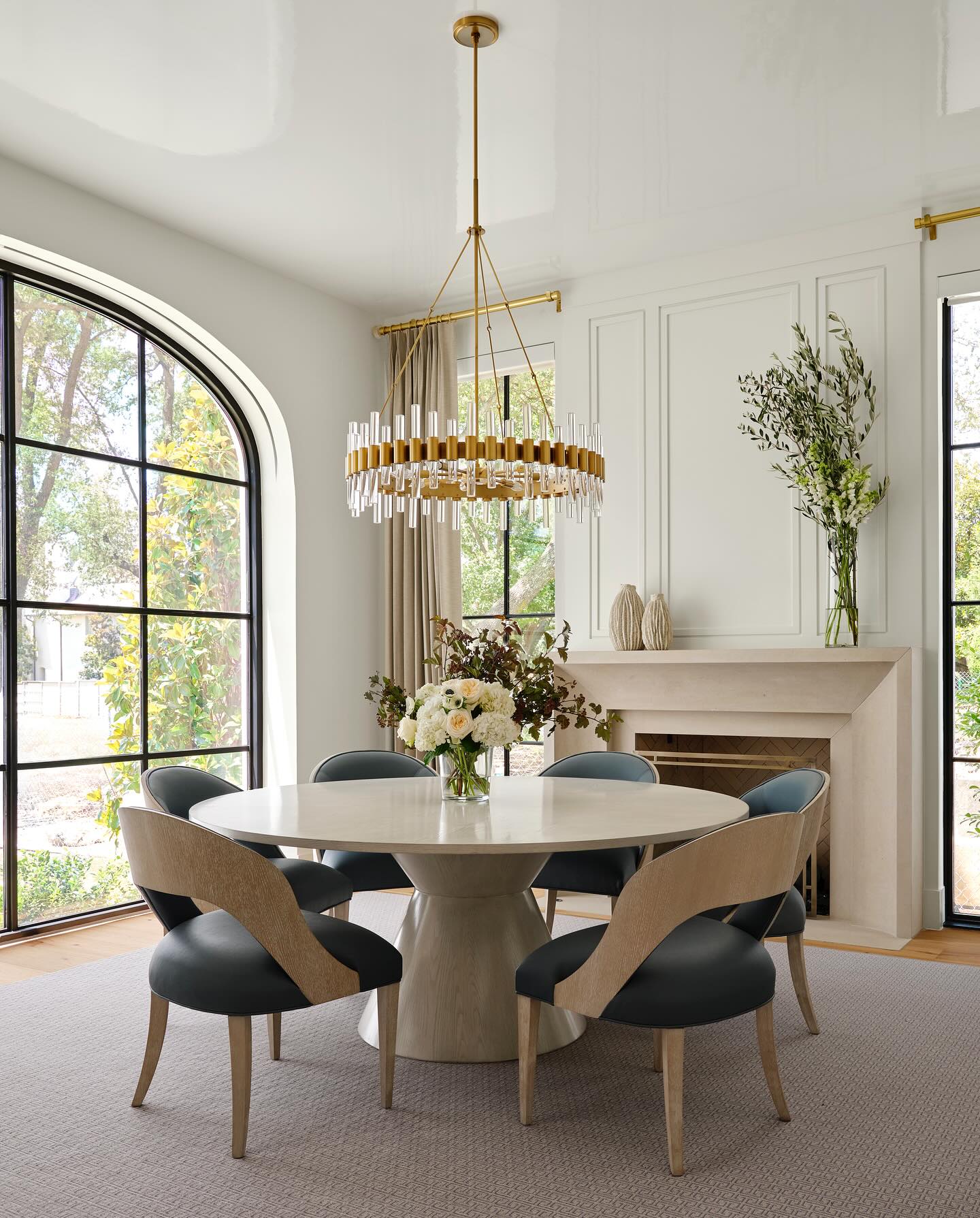
Design: @awelldressedhomellc
Photography @nathanschroderphoto
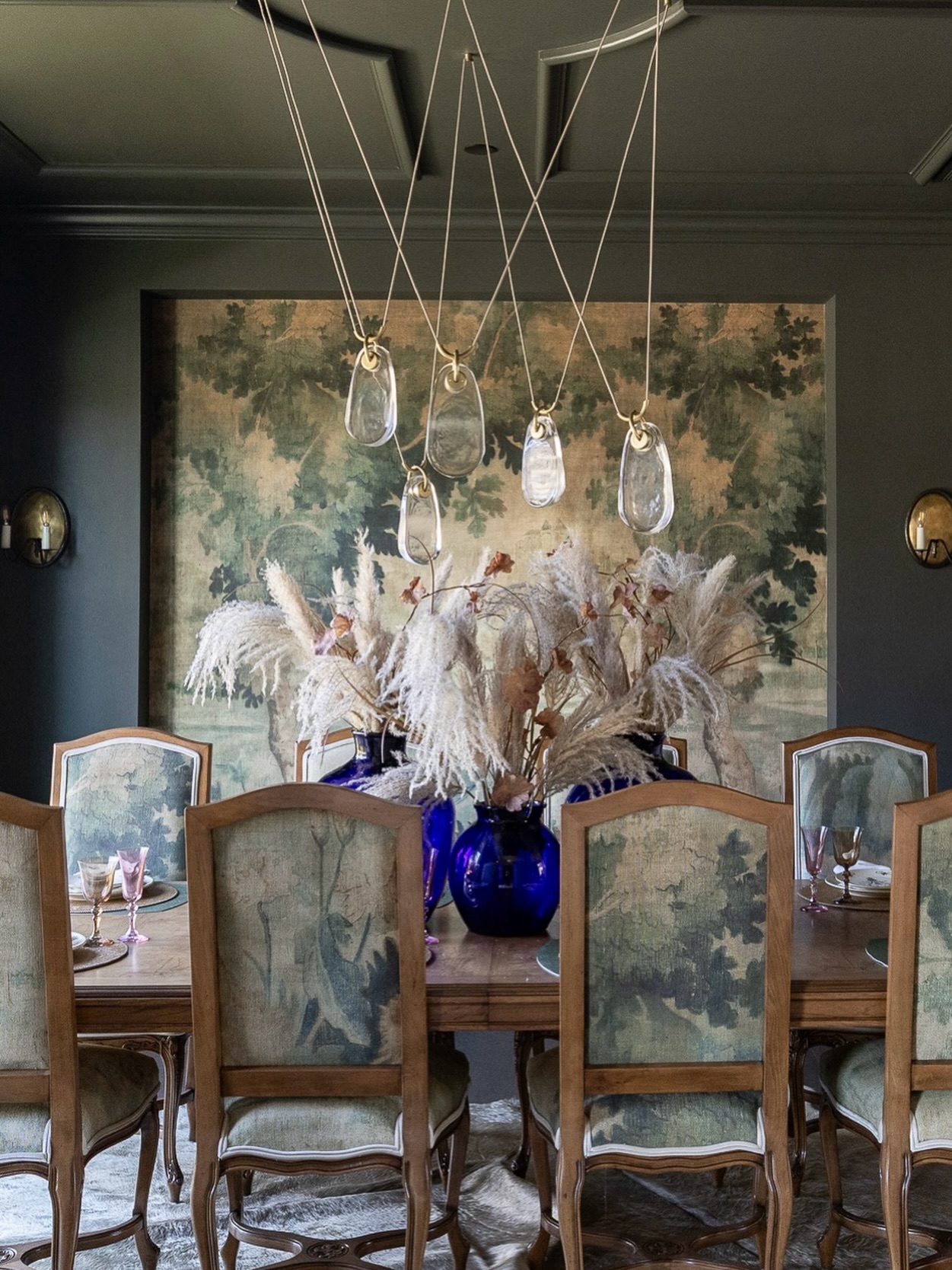
Design: @galeygrimesinteriors
Builder: @southernserenityhomes
Photography: @jennifer.saltsman.photography
Your lighting should speak the same visual language as your interior style. In a modern space defined by clean geometry and restrained palettes, a heavy ornate chandelier may feel visually out of proportion. In a rustic dining room built around natural wood and weathered finishes, a sleek minimal pendant can feel jarring.
That said, adding thoughtful contrast can bring balance and dimension to a room. To maintain cohesiveness, make sure your fixture has at least one element—materiality, shape, color—that ties into the rest of your room’s scheme. Pay attention to the dominant lines and shapes in your space. Interiors defined by curves often pair well with rounded or radial fixtures, while rooms with strong rectilinear architecture tend to support more angular profiles.
Dining Room Lighting Placement & Sizing Standards
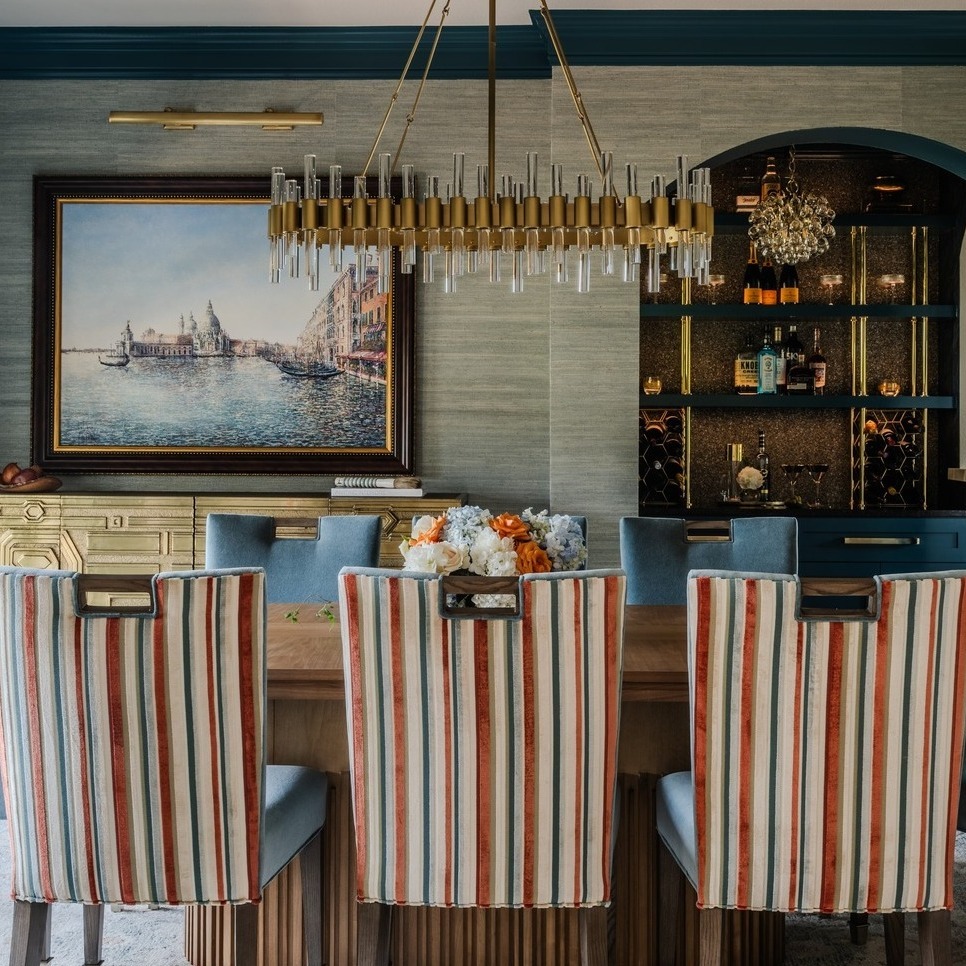
Design: @cyndihopkinsdesign
Even a stunning fixture can underperform if it's installed at the wrong height or sized incorrectly for the table it crowns. Understanding the standard guidelines—and knowing when to deviate from them—will help you select your lighting with confidence.
Calculating Diameter & Drop Height
When hanging a chandelier or pendant over a dining table, position the bottom of the fixture between 30 and 36 inches above the tabletop. This range keeps the light close enough to illuminate the table effectively while remaining above eye level for seated guests. For very large fixtures or unusually tall ceilings, you can push toward 34 to 38 inches without losing function.
The previously mentioned room-based formula (add room dimensions in feet and convert to inches) provides a solid starting point for fixture diameter. Aim for a fixture that spans roughly one-half to two-thirds the width of your table, for example, a 42-inch wide table pairs well with a chandelier between 21 and 28 inches in diameter. For linear fixtures over a rectangular table, the suspension should be about two-thirds of the table's length.
Sizing Cheat Sheet
| Room Size | Table Width | Suggested Fixture Diameter | Notes |
|---|---|---|---|
| 10x10 ft | 36–42 in | 18–24 in | Opt for semi-flush in low ceilings |
| 10x12 ft | 42–48 in | 22–28 in | Single pendant or small chandelier |
| 12x14 ft | 48–54 in | 26–32 in | Standard chandelier range |
| 14x16 ft | 54–60 in | 30–36 in | Room for a statement piece |
| 16x18 ft+ | 60–72 in+ | 36—48 in+ | Consider oversized or multi-light |
| Any (Rectangular) | Table length: 72–96 in | Linear fixture: 48—64 in | Aim for 2/3 table length |
Linear vs. Radial Silhouettes: How to Match Geometry
Geometry class may be a distant memory, but matching a fixture's silhouette to your table shape is actually one of the more intuitive decisions in the whole process.
Radial fixtures, such as traditional chandeliers and round pendants, project outward from a central point and pair naturally with round and square tables because they share the same structural logic. Linear fixtures are almost always the right call over a rectangular table, visually echoing its length and reinforcing it as the room's anchor. Mixing the two is possible and can create compelling contrast, but it works best when it feels like a deliberate choice rather than a default one.
Navigating Ceiling Constraints
Not every dining room has a ceiling box directly above the table. If your electrical box is off-center, a swag kit allows you to hang the fixture from the canopy at the box location and route the cord to a ceiling hook positioned over the table. The cord becomes part of the aesthetic, and in the right space, it can look intentional and even charming.
For low ceilings under 8 feet, the bottom of the fixture should sit no lower than 6.5 feet from the floor over the table or higher if possible. Semi-flush mounts with a short stem are usually the answer here. Look for fixtures where the visual interest lives in the form of the shade, the material of the body, or a distinctive finish rather than in a long drop.
Sconce & Credenza Lamp Placements
Wall sconces flanking a credenza, sideboard, or piece of art contribute ambient and accent lighting that makes the overall dining room feel layered. The standard placement is roughly 60 to 65 inches from the floor to the center of the sconce, though this can be adjusted based on the height of the furniture beneath. Sconces should be spaced far enough apart to frame the piece below without crowding it, typically between 28 and 36 inches apart, depending on fixture size.
Placing a pair of matching table lamps at either end of a long sideboard creates balance and symmetry. The shade bottom should sit roughly at eye level when you're standing, somewhere between 58 and 64 inches from the floor.
Common Lighting Mistakes to Avoid
Hanging a fixture too high is one of the most common errors in dining rooms. A chandelier hovering at ceiling height provides ambient light but loses its ability to create intimacy around the table. Get the drop right before worrying about anything else.
Undersizing is equally problematic. A chandelier that's too small for a table looks tentative, like someone chose it out of caution rather than confidence. When in doubt, size up, especially in rooms with high ceilings or strong architectural presence.
Skipping dimmer switches is a mistake that no beautiful fixture can compensate for. Dimmability transforms a dining room from a single-setting space into something responsive to time of day, mood, and occasion.
Overlooking ambient and accent sources creates a room that's bright at the table but dark at the edges. Layering in sconces, credenza lamps, floor lamps, or recessed perimeter lighting creates depth and makes the whole room feel more polished.
27 Dining Room Lighting Ideas by Style
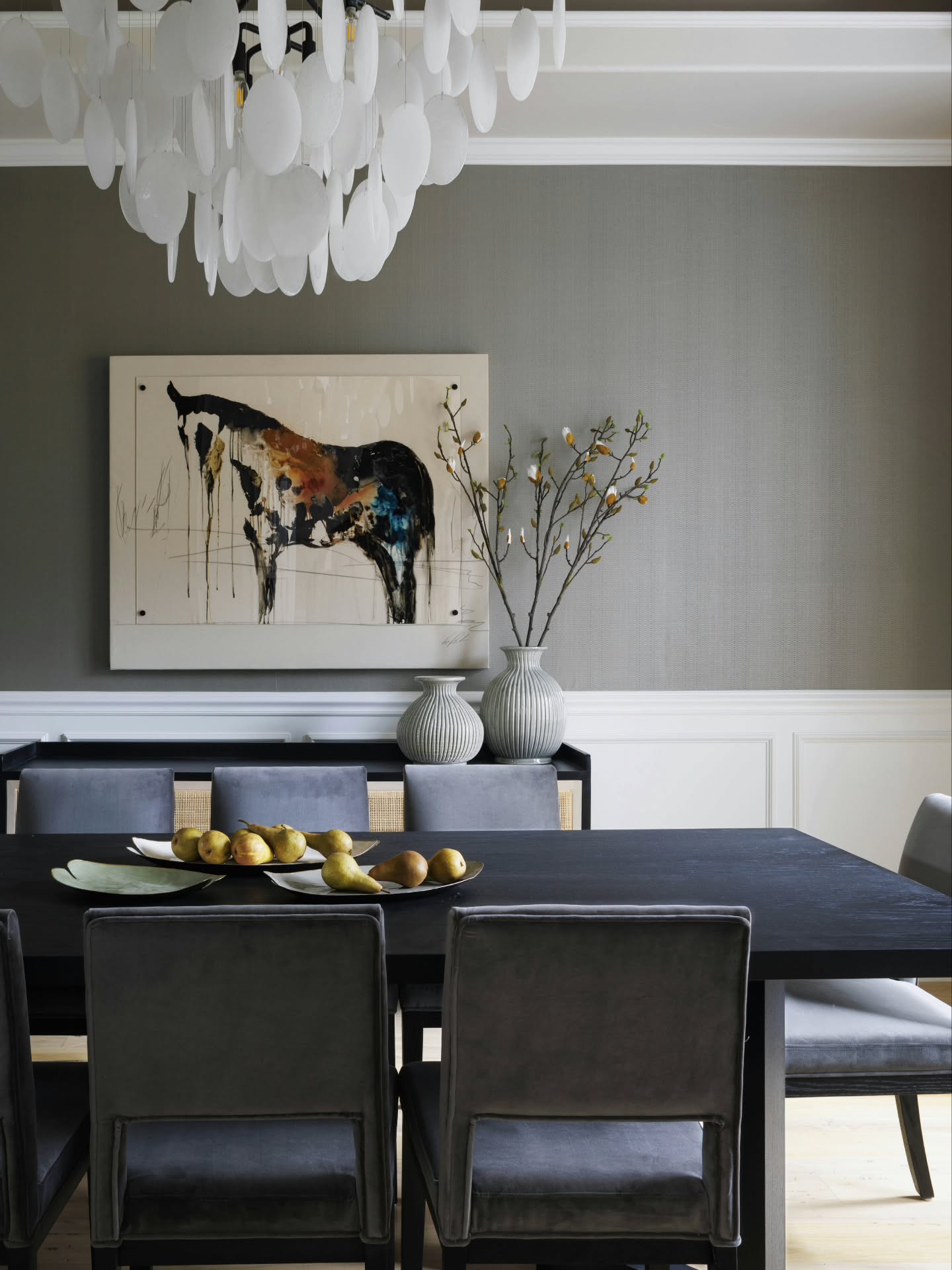
Design: @kimlayneinteriors
Photography: @emredfield
Theory only gets you so far. Here are 27 specific lighting ideas organized by aesthetic, each with context for where it works best and what to look for when you're ready to shop.
Modern Dining Room Lighting Ideas
Modern dining spaces favor restraint, precision, and a confident use of negative space. Fixtures should feel purposeful, where the construction details and materials do the decorative work.
- Linear Suspension Over a Rectangular Table
- Geometric Mixed-Metal Pendants
- Asymmetrical Chandelier
- Minimalist Integrated LED Profile
Transitional Dining Room Lighting Ideas
Bridging traditional and contemporary, transitional style finds the middle path where classic forms meet modern finishes. The best fixtures in this category feel edited rather than ornate, and timeless rather than trendy. Explore these products for inspiration:
- Antique Brass Drum Fixture
- Linen Shade Sconce With Antique Brass
- Streamlined Brass Candelabra
- Artisan-Blown Glass Flush Mount
Rustic Dining Room Lighting Ideas
Material honesty, natural imperfection, and the sense that objects have been shaped by human hands define the rustic aesthetic. Lighting in these spaces should feel like it belongs to the land.
- Hand-Hammered Iron and Leather Chandelier
- Organic Wood Branch Pendant
- Ceramic and Reactive Glaze Pendants
Industrial Dining Room Lighting Ideas
Factories, workshops, and urban lofts are the reference points here, with exposed construction and materials that speak to process. The best versions feel utilitarian in their logic but are considered in their execution.
- Forged Iron Chandelier
- Machined Brass and Glass Combo Fixture
- Perforated Mesh Diffuser Pendant
Coastal Dining Room Lighting Ideas
Woven fibers, natural shells, weathered wood, and glass in watery sea-washed tones set the material palette. Lighting should feel like it arrived from somewhere elemental.
- Woven Rattan Dome Fixture
- Draped Bead Chandelier in Coconut Shell
- Seedy Glass Pendant
Accent Dining Room Lighting Ideas
Accent lighting supports the primary overhead fixture rather than replacing it, adding depth and visual interest across the full room. A well-layered dining room uses these sources to make the space feel considered from every angle.
- Sculptural Sconces Framing a Sideboard
- Tall Buffet Lamps With Fabric Shades
- Picture Lights or Track Spots for Art Walls
Small Space Dining Room Lighting Ideas
Compact dining rooms and breakfast nooks present constraints that are also creative opportunities. The goal is maximum visual impact without overwhelming the space.
- Semi-Flush Mount With Directional LEDs
- Mini Pendant Cluster Over Round Table
- Sconce and Mirror Pairing for Light Amplification
Dining Room Lighting for Entertaining
When a dining room doubles as an entertaining space, its lighting needs to be adaptable across moods, occasions, and times of day. The fixtures matter, but the controls matter just as much.
- Dimmable Chandelier on a Multi-Scene Switch
- LEDs for Warm/Cool Ambience Shifts
- Dual-Layer Lighting Zones (Table vs. Ambient)
Bold Statement Lighting Ideas
Sometimes the fixture is the room's primary design gesture, the piece that everything else is organized around. When that's the intention, restraint everywhere else becomes the strategy.
- Oversized Sculptural Fixture as the Room Focal Point
Final Thoughts
The best dining room lighting ideas are the ones that complement your aesthetic and allow the space to flow exactly as it should. Whether you're drawn to a sculptural chandelier that anchors the room or a cluster of pendants that presents a focal point, the right choice comes down to your style, your space, and the moments you want to create in it.
FAQs About Dining Room Lighting
What Type of Lighting Is Best for a Formal Dining Room?
Chandeliers work well in formal dining rooms with high ceilings and traditional architectural details, while supplementary sconces or buffet lamps add the warmth and depth that elevate a space.
How Bright Should a Dining Room Chandelier Be?
Aim for enough output to illuminate the table at mid-range dimmer settings, which allows headroom to dim up and down. For a 12x14-foot room, 2,000 and 3,000 lumens is standard.
Can You Mix Metal Finishes in Dining Lighting?
Yes! Make mixed metals work with a clear hierarchy: one dominant finish that appears in the largest, most prominent pieces, and one secondary finish that appears as an accent.