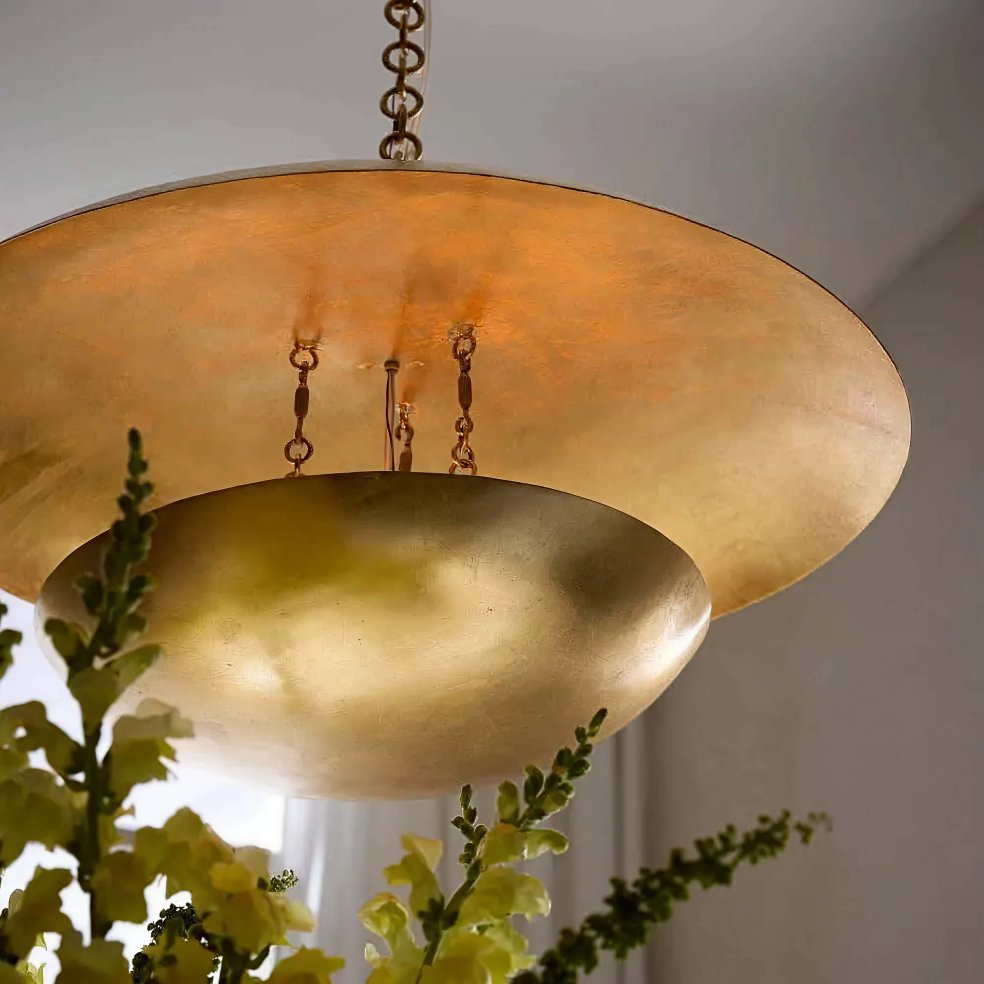
Design: andreaschumacherinteriors
Design: Ann Gottlieb Design @ann.gottlieb.design
Photography: Angela Newton Roy Photography
Styling: Kristi Hunter
More than any other room in the home, the bedroom should feel like a personal sanctuary: a space for rest and reflection, inspiration, and deliberate design choices that reflect how the space is lived in. Lighting is one of the most defining roles in that equation. The quality, warmth, and character of light can shift a bedroom’s mood from energetic to calming or from stark to deeply inviting. A well-chosen chandelier sets the tone of a room and anchors the ceiling, transforming an ordinary bedroom into an elevated escape. Consider this guide your framework for finding a chandelier that feels less like a purchase and more like it was always supposed to be there.
What to Consider When Choosing a Bedroom Chandelier
Chandeliers aren’t one-size-fits-all; the right one takes its cues from the bedroom it’s crowning. Ceiling height and bed placement are two major considerations. Rooms with 9 or more feet of clearance can support a fixture with a meaningful drop, while standard 8-foot ceilings call for a semi-flush design that still reads as intentional. And centering the chandelier above the bed rather than the geometric center of the room will create a stronger visual relationship between light and furniture.
Beyond scale, think about how the fixture relates to the surrounding interior. A handwoven rattan chandelier feels at home among warm wood tones and linen bedding; a sculptural iron piece settles naturally into darker, more graphic spaces. Whatever style you land on, don't underestimate dimmability. A chandelier that can't transition from full brightness down to a low, warm evening glow leaves a lot of the bedroom's potential on the table.
Curated Bedroom Chandelier Ideas by Style
Whatever the design language of your bedroom, there's a chandelier that speaks it fluently.
Modern Bedroom Chandelier Styles: Sculptural & Art-Forward
In a modern bedroom, the chandelier can serve as the focal piece of the room. Think of it less as infrastructure and more as a sculptural lighting element: a form that earns attention from every angle and expresses a point of view within the space. Because the bedroom vantage point is so often horizontal, the underside of a fixture matters as much as its profile. Abstract armatures in matte black, suspended glass orbs at irregular intervals, asymmetric arrangements of spun metal shades—these are decorative pieces that could carry a gallery-like presence and cast beautiful light.
Organic Lighting Ideas: Woven, Rattan, & Natural Textures
Lighting that carries traces of the hand, such as the irregularities of a woven material or the variation in natural fiber, brings warmth and tactility to an intimate space. When executed with precision, organic chandeliers carry a quiet, grounding sophistication. Pair one with a linen headboard, raw wood nightstands, and layered neutral bedding for a room that feels both collected and effortless.
A Modern Classic: Warm Brass & Bronze
Not all brass is created equal. The highly polished brass of another era reads very differently from today's living finishes, including aged brass and antique bronze that improve with age. A warm brass chandelier amplifies the quality of light, casting a glow that flatters skin tones and softens the room.
Elevated Light with Artisan Glass & Crystal
Glass and crystal give light an animated quality. A chandelier featuring handblown glass—clear, smoked, amber, or opaline—creates illumination that shifts with the time of day, deepening as evening falls and taking on a different character when dimmed low. The one-of-a-kind nature of handblown glass pieces gives each fixture an elevated presence that mass-produced alternatives lack.
Masculine Bedroom Chandelier Ideas: Leather, Iron, & Mixed Media
For rooms that call for something more grounded and textural, chandeliers incorporating iron, forged steel, leather-wrapped armatures, or mixed industrial and refined materials offer a different kind of sophistication. A fixture combining a cast-iron frame with leather-wrapped arms and aged brass accents has authority without aggression. These pieces work equally well in traditionally masculine spaces and gender-neutral rooms where the design vocabulary prioritizes material honesty over decorative softness.
How to Choose the Right Size and Placement for Your Bedroom Chandelier

Design: carriedelanyinteriors Build: buildutah
Photos: lindsay_salazar_photography Architecture: think_architecture
Even the most beautiful fixture will fall flat if it's improperly scaled or installed at the wrong height.
Calculating the Ideal Diameter for Your Room
To find a target diameter for your fixture, add the room's length and width together in feet, then convert that number to inches. For example, a 12-by-14-foot bedroom suggests a chandelier around 26 inches in diameter. Or, measure the width of the mattress—a fixture roughly half to two-thirds that size will feel proportionate.
Clearance Rules for Over-the-Bed Styling
As a general rule, the bottom of a bedroom chandelier should hang at least 7 feet above the floor. When the fixture is positioned over the bed, that clearance is measured from the mattress surface rather than the floor, and since most beds sit roughly two feet off the ground, you're working with about 5 feet of space between the top of the mattress and the bottom of the fixture. Tighter than that starts to feel uncomfortable. If your ceiling height makes that tricky, a semi-flush chandelier is the go-to solution.
Balancing Visual Weight in the Space
Visual weight is trickier to gauge than physical size: an oversized chandelier in rattan can feel surprisingly airy because its woven form lets light and negative space pass through, while a compact iron fixture in matte black can anchor a room far more firmly than its dimensions suggest. Rooms with lower ceilings benefit from open, delicate forms that help preserve a sense of height, while rooms with soaring ceilings call for a fixture with a bit more mass or a longer drop to bring the space back down to a human scale.
Quick Reference Size & Drop Table
| Room Size | Suggested Diameter | Standard Ceiling Drop | High Ceiling Drop |
|---|---|---|---|
| 10' × 10' | 18–20 inches | 12–18 inches | 24–36 inches |
| 12' × 14' | 24–26 inches | 12–18 inches | 24–48 inches |
| 14' × 16' | 28–30 inches | 18–24 inches | 36–60 inches |
| 16' × 20'+ | 32–36 inches | 18–24 inches | 48–72 inches |
Layering the Light: Beyond the Chandelier
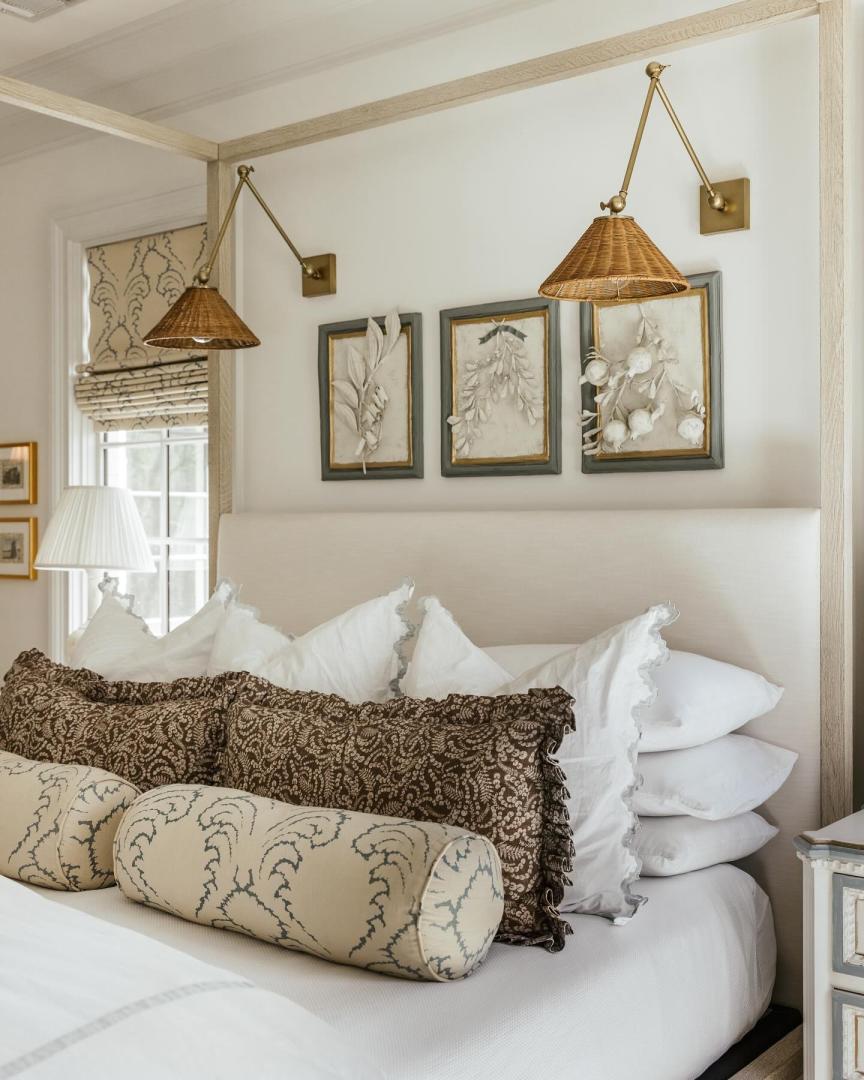
Interior Design: @bmaathome
Photography: @kristinkarch
A chandelier sets the tone, but a truly well-lit bedroom is built in layers.
Balancing Ambient, Task, & Accent Zones
A chandelier is the anchor of your lighting scheme, not the whole of it. Ambient light (produced by a chandelier) fills the space and sets the mood; task light (fulfilled by bedside wall sconces or compact nightstand lamps) facilitates reading and getting dressed; and accent light (from floor lamps or tabletop lamps) draws attention to objects or architectural details worth highlighting. Layering these three types of light is key to creating an inviting, layered look.
Complementary Fixtures: Pairing Sconces & Lamps
The simplest way to ensure your chandelier and supporting fixtures feel cohesive is to work within a consistent material or finish family (think: a brass chandelier with brass-armed sconces, or an iron chandelier alongside ceramic lamps with iron hardware). Sconces flanking the headboard are particularly effective: they keep the bedside table clear, direct light where it's needed, and contribute to the room's overall composition in a way table lamps cannot quite match.
The Importance of Dimmability & Scene Control
Adjusting your bedroom lighting throughout the day supports your body's natural circadian rhythm and complements your daily rituals and routines. Modern smart dimmers allow you to program specific settings, including bright for morning, mid-level for reading, or very low for unwinding. Ensure any chandelier you select is rated for dimmer use, and that your chosen bulbs are compatible with your specific dimmer model.
Selecting the Right Bulb Temperature
For a warm, golden light that flatters skin tones, enhances natural materials, and supports the psychological shift toward rest, bulbs with a 2700K to 3000K temperature rating are best. Cooler temperatures (3500K and above) read as activating and clinical, which works against the bedroom's function as a sanctuary and can interfere with the body's natural melatonin production.
Tailoring the Fixture to the Room Type
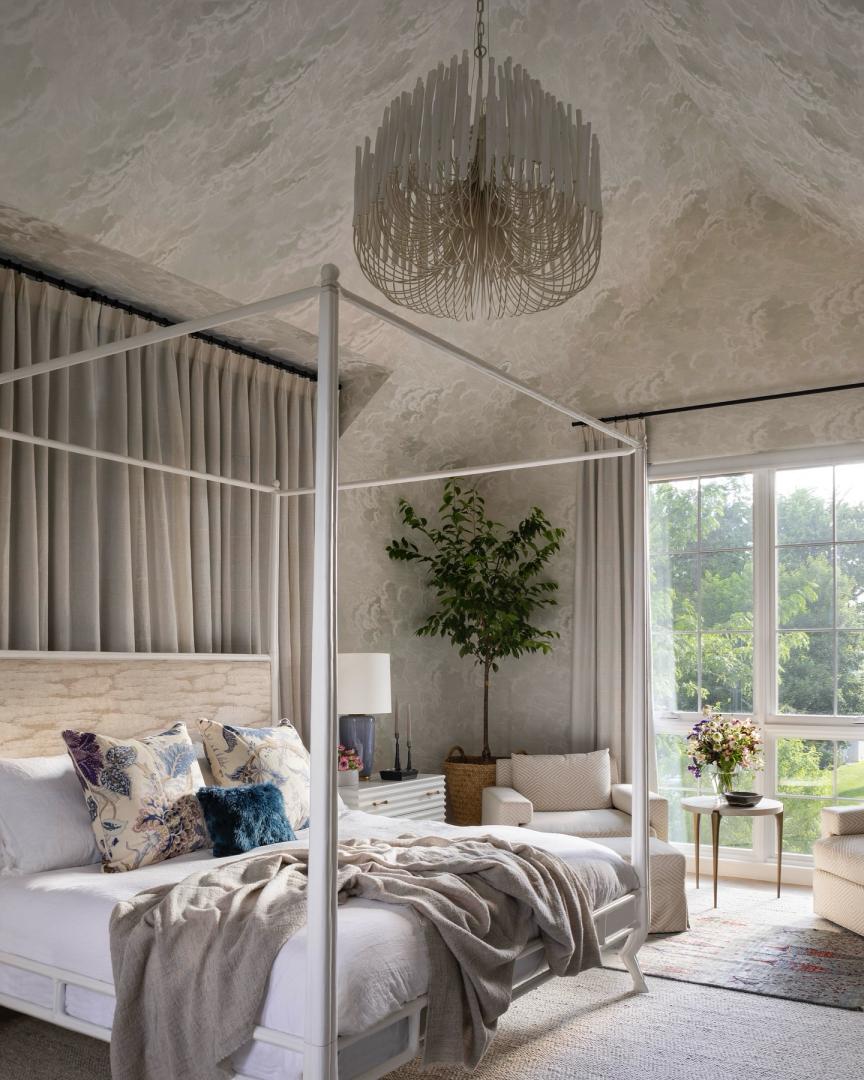
Design: andreaschumacherinteriors
The best chandelier for your bedroom depends as much on the room itself as it does on your personal taste.
Statement Pieces for Grand Master Suites
Sculptural chandeliers were made for grand master suites with ceilings of 10 feet or higher. Don't be afraid to size up: a fixture that feels substantial from the doorway will look just right from the bed. If the room has an architectural feature worth celebrating, like a coffered ceiling or a vaulted peak, let the chandelier play off it. There's something special that happens when light and architecture work together: the room stops feeling furnished and starts feeling designed.
Refined Scale for Compact City Living
A smaller bedroom does not have to settle for a lesser lighting experience. Semi-flush chandeliers have become increasingly sophisticated, offering the visual presence of a full fixture in a profile that maintains safe clearance. In compact rooms, every object is seen up close, so opting for high-quality materials and well-made craftsmanship is key.
Versatile Options for the Guest Retreat
The guest bedroom has a slightly different brief: it needs to feel warm and welcoming without being too opinionated. To suit a wide range of people and tastes, choose a chandelier that leans quietly refined, like a simple woven form or a clean, aged brass fixture with white shades.
Arteriors Design Standard: Why Our Chandeliers Are Built to Last
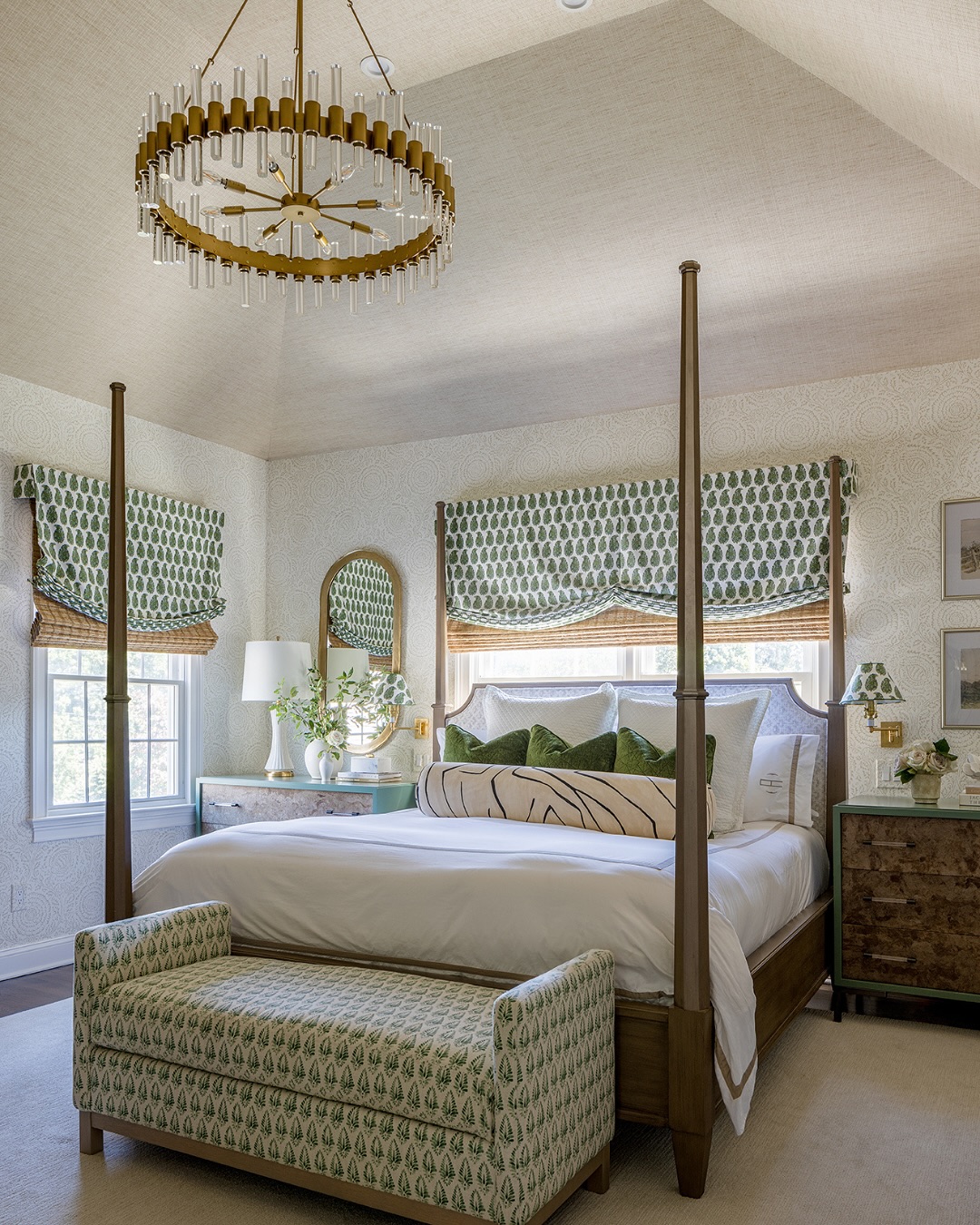
Design: plumeinteriorsnj
Photography: @kylejcaldwell
Styling: @ginaciotti_
At Arteriors, a chandelier is only worth making if it's worth keeping.
Embracing Living Finishes & Natural Patina
We’re drawn to materials that age honestly, developing character over time rather than fighting to maintain artificial uniformity. Our living finishes in unlacquered brass, oxidized bronze, and natural iron are designed to shift and deepen with use. Like a beautifully aged wine, the fixture you hang today will look different—and even better—in five or ten years.
Assessing Material Integrity & Construction
Every Arteriors chandelier is designed to be handed down rather than replaced. Our fixtures are crafted from hand-sourced glass, solid cast metal, and genuine natural fibers, with wiring rated beyond standard residential requirements and hardware tested for long-term weight-bearing capacity. When assessing any chandelier purchase, look past the finish to the construction, which determines whether a fixture will reward the investment over time.
Frequently Asked Questions About Bedroom Chandeliers
How Low Should a Chandelier Hang in a Bedroom?
The bottom of the fixture should hang at least 7 feet above the floor in walkable areas. Over the bed, maintain approximately 5 feet of clearance above the mattress surface. Rooms with 9-foot or higher ceilings might benefit from additional drop—simply maintain the minimum clearance and adjust to serve the room's proportions.
Can You Put a Chandelier in a Bedroom With 8 Foot Ceilings?
Yes, but fixture selection must be approached carefully. 8-foot ceilings require a chandelier profile of approximately 12 inches or less from the ceiling to the bottom of the fixture. Semi-flush chandelier designs are engineered for this constraint and now include options with genuine design ambition. Look for visual complexity within a contained profile rather than defaulting to a flush mount that makes no design statement.
What Is the Best Light Temperature for a Bedroom Sanctuary?
Between 2700K and 3000K. This range produces warm, golden light that is flattering to skin, enriches natural materials, and supports rest. When in doubt, choose the warmer end, as it’s easier to add a cooler task light for specific needs than to counteract ambient light that feels too clinical.
Can You Use a Chandelier as the Main Light Source in a Bedroom?
Yes. Just make sure the chandelier is on a dimmer, the bulbs deliver adequate lumen output (target 20 to 30 lumens per square foot for bedroom ambient lighting), and the fixture distributes light evenly. Supplement with bedside task lighting for reading, and the chandelier can handle everything else.
Are Bedroom Chandeliers Safe for Low Ceilings or Small Rooms?
Bedroom chandeliers are safe in low-ceiling and small rooms when the appropriate fixture type is selected and properly installed. The safety consideration is clearance— maintaining 7 feet above the floor and the appropriate height above the bed, not the room size.
What Type of Bulbs Are Best for Bedroom Chandeliers?
LED bulbs rated at 2700K to 3000K are the best choice for most bedroom chandeliers. Modern LEDs produce light virtually indistinguishable from incandescent in color quality while consuming far less energy and lasting significantly longer.