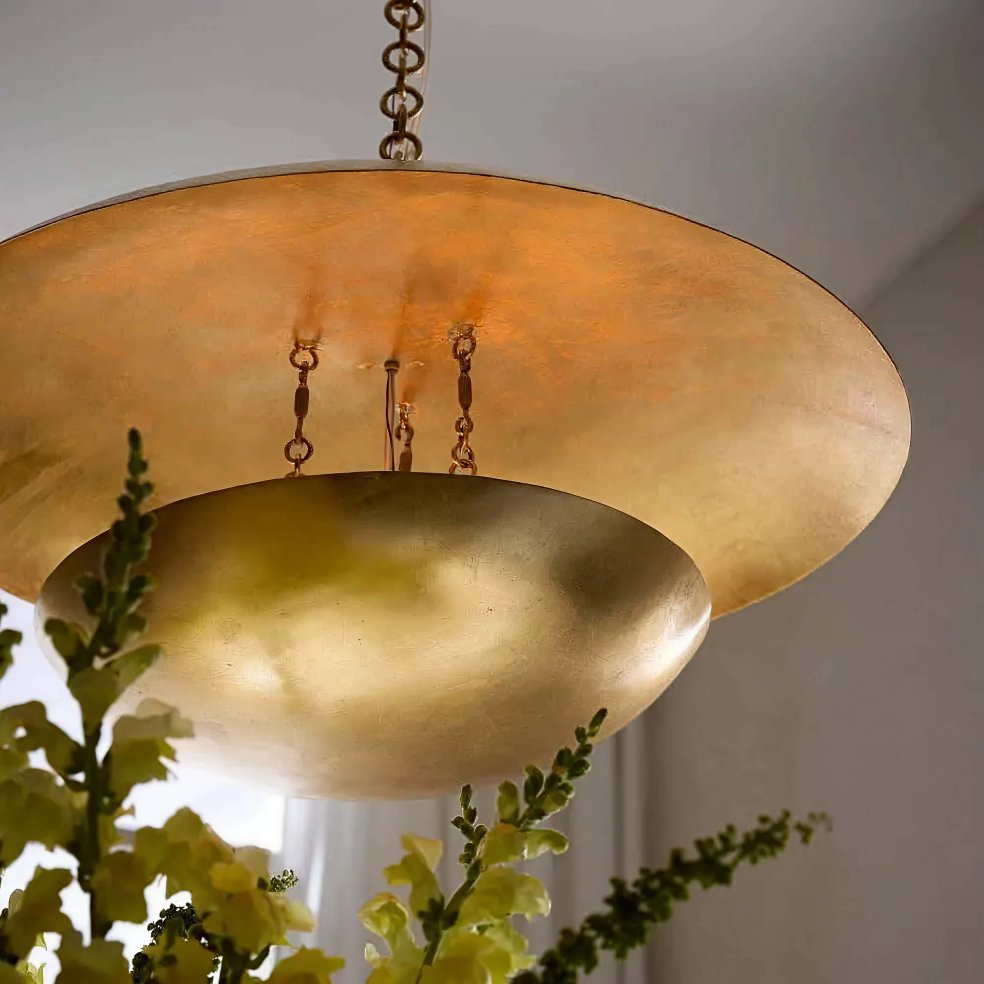
Design - @firefinish_interiors
A thoughtfully lit workspace does more than set a mood. Research consistently links proper lighting to improved focus, sustained cognitive function, and measurable gains in productivity. Whether you're converting a guest room into a dedicated study or carving out a desk space in a corner of a larger room, lighting is key to creating a worthwhile work-from-home setup. These expert-appointed home office lighting ideas are your starting point for creating an elevated workspace that looks as good as it performs.
The Fundamentals of Home Office Lighting Design
Effective home office lighting design begins with understanding the relationship between natural and artificial light, and knowing how each one behaves across the arc of a day. Establishing this foundation makes every fixture choice that follows more intuitive.
Balancing Natural and Artificial Light
Natural light is the most energizing light source available, but harnessing it requires thoughtful space planning in a home office. For the most flattering natural light that won’t interfere with your computer screen visibility, place your desk perpendicular to a window. Facing the window creates glare on your screen, while the window at your back casts a shadow across your work surface.
As natural light shifts throughout the day, your artificial lighting needs to compensate. Layering ambient and task sources ensures that a productive morning setup doesn't become a strained afternoon struggle. Dimmable fixtures on separate switches or smart controls allow you to dial up artificial light as the sun moves, keeping your desk consistently well-lit from early morning through evening calls.
Reducing Glare and Eye Strain for Sustained Focus
Glare is the most common source of visual fatigue in a home workspace, and it often comes from sources people overlook: a ceiling fixture positioned directly overhead, light bouncing off a glossy desk surface, or a monitor angled toward a window. Diffused light sources, such as fixtures with frosted glass or linen shades, scatter light softly and eliminate harsh hot spots.
For the desk itself, position task lighting so it illuminates your work surface from the side rather than from directly above or in front of you. This sideline placement reduces reflected glare on screens and paper alike. Matte finishes on desk surfaces and monitor screens help control the glare as well.

Design by @amberpiercedesigns, photography by @lesliebrownphotography
How to Layer Ambient, Task, and Accent Lighting
Properly layering light sources gives you control over both the function and the atmosphere of a workspace. Here’s how to get it right.
Ambient Lighting: Establishing Overall Brightness
As the foundational base layer, ambient light washes over a room and allows you to easily navigate a space. In a home office, this typically comes from ceiling-mounted fixtures, including chandeliers, pendants, and flush or semi-flush mounts. The goal of ambient lighting is to establish an even, comfortable brightness without harsh contrasts between lit and unlit areas.
Choosing a fixture with a diffused shade or globe keeps the ambient light soft. Dimmable versions give you the flexibility to raise brightness for focused daytime work and bring it down for early morning sessions or video calls where a softer background reads better on screen.
Task Lighting: Focused Illumination for the Desk
A well-positioned desk lamp provides targeted illumination for reading, writing, and close-focus work without forcing the entire room to carry that level of brightness. The best task lighting for home office desks is adjustable, both in position and intensity, so you can angle it precisely and adapt as your work changes throughout the day.
Look for lamps with a stable weighted base and an articulating arm. The shade should be opaque or semi-opaque to keep light directed downward rather than scattering it across your line of sight. Color temperature matters here too; aim for a warm-to-neutral range to avoid creating a cold, clinical feel at the desk.
Accent Lighting: Highlighting Architectural Features and Wall Décor
If you’ve ever felt uneasy in an office setting, a lack of accent lighting may be to blame. When paired with ambient and task sources, accent lighting provides an atmospheric quality that makes a room feel inviting. A picture light over a framed print, wall sconces flanking a bookcase, or a small table lamp on a console shelf all contribute to the visual depth of a space. Accent sources add warmth, dimension, and a sense of intentionality that distinguishes a well-designed office from one that’s solely utilitarian.

Design by @rookanddash, Photography by @raftermen_llc
Design-Forward Home Office Lighting Ideas by Fixture
The fixture you choose does double duty: it provides light and makes a design statement. These modern home office lighting ideas span a range of forms and aesthetics, each suited to a different kind of workspace.
Statement Pendants and Chandeliers as Focal Points
In a home office with enough ceiling height, a single sculptural pendant anchored over the workspace creates a defined zone within the larger room while providing ambient light from above. For larger offices or those with double-height ceilings, a chandelier makes the visual statement proportionate to the scale of the space.
Choose pendant forms that echo the geometry of your desk and furnishings. A linear suspension suits a wide rectangular desk, while a radial pendant or clustered globe grouping works well over a round or compact square surface.
Flush Mounts and Minimalist Ceiling Lighting
In offices where ceiling height is a constraint or where a cleaner architectural profile is the goal, flush mounts deliver ambient light without visual clutter overhead. Fixtures in handblown glass, patinated metal, or refined ceramic forms are as decorative as they are functional, and they keep sightlines clear in rooms where a hanging fixture might feel imposing.
With a short stem, semi-flush mounts offer a middle-ground option that adds dimension to a space without requiring significant ceiling clearance.
Sculptural Desk Lamps for Artisanal Impact
A sculptural lamp in a distinctive material, such as ceramic, reactive glaze, or hand-formed brass, elevates the desk from a work surface to a curated vignette. Look for lamps where the base functions as a small piece of sculpture and the shade directs light cleanly across the workspace.
Table lamps with weighted ceramic bases and linen or glass shades tend to work well in this context: they're visually grounded, materially interesting, and provide the soft diffused task light that makes long working sessions easier on the eyes.
Wall Sconces for Space-Saving Elegance
Wall sconces are particularly useful in home offices where desk or floor space is at a premium. Mounted at reading height on either side of a shelving unit, flanking a window, or positioned to wash light across a gallery wall, sconces add soft illumination and visual presence without consuming any horizontal surface area.
Swing-arm versions are especially practical in an office space, as they extend and retract to direct light where it's needed throughout the workday.
Floor Lamps for Flexible, Layered Warmt
A floor lamp in the corner of a home office does the work of an ambient or accent source while remaining easily repositioned. An arc lamp that sweeps over the desk doubles as task lighting from above, while an uplight floor lamp bounces indirect illumination off the ceiling to soften the overall room.
In offices that double as sitting rooms or reading nooks, a floor lamp positioned beside a lounge chair creates a secondary zone within the space.

Design by @stefansteil, Photography by @stephenkentjohnson, Architecture by @bednarzconstructionllc
Tailoring Lighting to Your Specific Workspace
The best lighting for your home office depends on the particular constraints and character of the room. Lighting for a compact home office calls for different thinking than illuminating an open-plan studio or a dual-purpose space.
Small Home Office Lighting Ideas
While it’s tempting to keep furnishings small and understated in a compact office, this approach often produces a timid, underpowered result. A single fixture scaled appropriately to the room, whether a flush mount with visual interest or a single graphic pendant, reads as confident rather than cluttered. Use a mirror or reflective surface to bounce light around the room and make it feel more expansive, and rely on wall sconces rather than table or floor lamps to keep surfaces clear.
Dual-Purpose Room Lighting Solutions
When an office shares space with a guest room, living room, or library, the lighting needs to serve multiple modes. Separate circuits for the overhead ambient source and any accent or task sources give you independent control over each zone. A desk lamp that can be switched off entirely when the room is in social mode, and an overhead fixture dimmable enough to serve a relaxed evening setting, keep the space versatile without any visual compromise.
Illuminating a Creative Studio or Design Atelier
For creative professionals, color rendering is as important as brightness. Lighting with a high Color Rendering Index (CRI of 90 or above) ensures that colors read accurately, a detail that matters significantly in photography, textile, or fine art work. Layer daylight-balanced task lighting over the work surface with warmer ambient sources elsewhere in the room, so you can evaluate work under accurate light without the entire room feeling clinical.

Design by @jillwhitedesigns
Expert Advice: Choosing the Best Lighting for Your Home Office
The decisions that refine a home office lighting scheme go beyond fixture selection. Material, color temperature, and silhouette all shape a room’s visual presence and functionality.
Selecting the Right Color Temperature
For a home office, color temperatures ranging between 2700K and 4000K cover most working scenarios. Warmer temperatures (2700–3000K) create a relaxed, residential feel suited to early mornings, video calls, and spaces that flow into living areas. Cooler temperatures (3500–4000K) deliver crisp, energizing light better suited to focused work and detailed tasks. Many designers recommend layering both: a warmer ambient source paired with a slightly cooler task lamp gives you the flexibility to emphasize either quality depending on the task and timing at hand.
Mixing Materials, Textures, and Finishes
Material cohesion is key when designing a home office with a layered lighting scheme. This doesn't mean matching everything identically, but rather establishing a clear dominant finish (antique brass, matte black, patinated bronze) that appears in the largest or most prominent pieces, with a secondary material or finish appearing as an accent. Without a clear hierarchy and material through-line, a room with several fixtures may feel disjointed.
Texture matters too. Woven shades, ceramic bases, and handblown glass each filter light differently and contribute visual warmth. A fully polished-metal office can feel cold regardless of the light's actual color temperature, while a mix of matte and reflective surfaces creates a more naturally balanced quality.
Matching Lighting Silhouettes to Your Interior Style
Your home office lighting should speak the same visual language as the room around it. A minimal, pared-back office benefits from fixtures with clean geometry and restrained detailing; an office with more expressive furnishings and layered textiles can carry a more sculptural or ornate fixture. The key is intentionality: a fixture chosen with the same rigor as the desk or shelving strengthens the overall design.

Design: @etchdesigngroup, Project: #EDGVistaWest, Photography by @averynicolephoto
Common Home Office Lighting Mistakes to Avoid
Even well-intentioned home office lighting design can fall short when certain fundamentals are overlooked. These are the most common errors, and the reasoning behind why they matter.
Poor Placement and Disruptive Shadows
A ceiling fixture positioned directly above a desk chair casts a shadow directly over your work surface, which defeats its purpose. Think about placement in relation to where you actually sit and work. Ambient light should come from the sides or slightly ahead rather than directly overhead, and task lighting should come from the side opposite your dominant hand to avoid casting a shadow as you write.
Relying Solely on Overhead Lighting
When installed in isolation, overhead lighting produces flat, undifferentiated brightness that reduces a room's sense of depth and can cause eye fatigue over long sessions. The single-source approach also hinders a room’s flexibility by, for example, eliminating a way to create a warmer, lower-lit atmosphere for a late afternoon video call or a focused reading session. Layering at least two sources, even something as simple as an overhead ambient fixture and a desk lamp, makes an immediate and noticeable difference.
Ignoring the Impact of Decorative Accessories
A lamp chosen purely for function, without attention to form, misses the opportunity to contribute to the room's design. In a home office where the lighting is visible throughout the day and often visible to others on video calls, the aesthetic quality of each fixture genuinely matters. A desk lamp with a distinctive silhouette, a floor lamp with a beautifully weighted base, or a sconce in an unexpected material all signal that the space was designed with care, which, in turn, shapes how you feel working in it every day.
Final Thoughts
The right home office lighting ideas fuse function and intention in equal measure. A well-layered scheme, one that balances ambient, task, and accent sources, supports the kind of sustained focus that productive work demands while giving the room a compelling design quality.
FAQs About Home Office Lighting Ideas
What Is the Best Color Temperature for Home Office Lighting?
A range of 2700K to 4000K suits most home offices. Warmer tones work well for ambient light; slightly cooler tones improve focus at the task level.
Can a Statement Chandelier Work In a Home Workspace?
Yes, provided the ceiling height and room scale support it. A chandelier anchors the room and elevates the space from functional to designed.
How Do I Optimize Home Office Lighting for Video Calls
Position a soft, diffused light source in front of you, at face level. A dimmable lamp or ring-adjacent desk light placed just behind the monitor works well.
How Do I Scale a Desk Lamp for an Executive Desk?
Choose a lamp whose shade width is roughly 1/3 the desk's depth. A weighted base with an articulating arm scales better to a large surface than a fixed compact lamp.
How Do I Reduce Computer Glare Without Sacrificing Aesthetics?
Use diffused light sources with frosted or linen shades, position task lighting to the side of your screen, and choose fixtures with directional control so you can angle light away from reflective surfaces.