A cornerstone of modern living is treating a home’s outdoor spaces as an extension of its interiors, where comfort and personal taste converge under open sky. The key to creating a seamless indoor-outdoor connection is selecting furniture that withstands the elements without sacrificing style.
That means approaching the process with an eye for proportion, a clear understanding of how the space will be used, and a commitment to materials that perform as beautifully as they look. This comprehensive guide for how to choose outdoor patio furniture will help you outfit your exterior living spaces with confidence and answer questions like: What is the most durable patio furniture made of? What type of patio furniture is the most weather-resistant? When is the best time to buy patio furniture?

Planning Your Space: What to Consider When Buying Outdoor Patio Furniture
Great outdoor rooms begin with deliberate planning, well before a single lounge chair or side table is sourced.
The Designer's Quick-Reference Buying Checklist
Before diving into specific pieces, work through these questions:
-
What are the primary uses: dining, lounging, entertaining, or a combination?
-
What is the approximate square footage of the outdoor area?
-
What climate conditions will the furniture face: humidity, intense sun, high winds?
-
What is the architectural style of the home?
-
What are the sightlines from the primary interior spaces to the outdoor area?
-
How will traffic flow between indoors and outdoors?
-
Do lead times need to align with a seasonal deadline or project completion date?
Answering these questions at the outset saves significant time and expense later.
Assess Your Climate, Usage, and Long-Term Investment
Climate is the most consequential variable in any outdoor furniture decision. A piece that thrives on a shaded urban rooftop may degrade rapidly on a Gulf Coast terrace, where salty air, humidity, and UV rays are abundant. Before selecting materials, take stock of your specific conditions and whether the furniture will be stored during the off-season or left exposed year-round.
Usage frequency is also worth early consideration. Within any given space, the pieces that endure the most wear, such as dining chairs and lounge seating, deserve the most rigorous material specifications. And when considering the investment, think about the purchase in terms of years rather than seasons.
Outdoor furniture that is thoughtfully chosen and maintained can last a decade or more, which means getting the selection right from the start pays dividends long after that first summer.
Evaluate the Architecture and Landscape
A well-furnished outdoor space reads as a coherent continuation of the home. Clean-lined contemporary architecture calls for furniture with geometric precision and restrained materiality, such as powder-coated aluminum frames with tailored woven seating.
Traditional or Mediterranean homes may invite warmer materials: teak, stone, and richly textured fabrics in earthy tones. Let the natural setting inform your palette and the visual weight of your selections.

Define Zones: Lounging, Dining, and Entertaining
Outdoor spaces function best when organized into distinct zones defined by furniture choice and placement. Lounge seating arranged around a coffee table signals that this corner of the patio is for settling in and engaging in intimate conversation.
Shift to the other end of the space, and counter-height stools pulled up to an outdoor bar create a casual, social space where guests naturally gravitate. A dedicated dining area with a proper table and upright chairs completes the picture, giving the space a clear center of gravity for seated al fresco meals.
Smaller patios can achieve the same layered effect at a more intimate scale, even a pair of lounge chairs with a side table reads as a distinct zone when placed with intention.
Establish Flow Between Indoor and Outdoor Spaces
Furniture placement, sightlines, and material palettes should draw a coherent thread from interior to exterior. Keep pathways clear, avoid furniture that blocks door openings, and scale pieces so they feel proportioned when viewed from inside. Also, think about how light moves through the space across the day, as morning sun versus afternoon shade will inform both furniture placement and fabric selection.
What Type of Patio Furniture Is the Most Weather-Resistant?
Not all outdoor furniture is built to handle the same conditions, and the environment your pieces live in will determine how long they last and how well they hold up. Understanding the key stressors and how different materials respond to them is the foundation of any smart outdoor specification.

Understanding UV, Moisture, and Salt-Air Resistance
The three primary environmental stressors for outdoor furniture are ultraviolet radiation, moisture, and airborne salt. UV exposure fades fabrics and breaks down unprotected finishes; moisture enables corrosion, warping, and mold growth; and salt air accelerates all of these processes, making coastal environments the most demanding of any climate zone.
Look specifically for performance-rated fabrics, powder-coated aluminum frames, and structural fibers formulated to resist UV degradation.
Matching High-Performance Materials to Your Specific Climate
When choosing the best outdoor furniture material, there is no one-size-fits-all solution. In coastal environments, rust-resistant aluminum outperforms steel. In desert climates with extreme UV, solution-dyed acrylic fabrics offer better colorfastness than standard outdoor textiles.
And in humid, forested settings, teak's natural oils make it inherently resistant to moisture and fungal growth. Matching material to microclimate is one of the clearest ways a designer adds value to an outdoor project.
Protective Finishes and Artisan Coatings
Beyond the base material, the quality of a finish is a defining trait of exceptional outdoor furniture. Powder coating creates a UV-resistant layer that comes in an extensive range of colors and sheens, while a hand-applied finish can elevate the look and durability of a cast-aluminum piece.
Natural materials have their own finishing logic: teak benefits from periodic oiling or a UV-blocking sealer to preserve its warm color and structural integrity, and stone surfaces take well to penetrating sealers that repel moisture without masking the natural variation in the material.
What Is the Most Durable Patio Furniture Made Of?
Material selection is where durability is won or lost, and in the luxury category, the best options age gracefully and improve the look of a space over time. Here is how the leading materials compare.

Luxury Material Comparison Table: Durability, Lifespan, and Care
Use this comparison chart to find the right patio furniture material for your needs.
|
Material |
Key Strengths |
Care Requirements |
|
Premium Teak |
Natural oils, dimensional stability |
Annual oiling or sealing |
|
Powder-Coated Aluminum |
Lightweight, rust-proof, wide finish range |
Periodic washing; touch up chips |
|
High-Performance Woven Fibers |
UV-stable, moisture-resistant |
Rinse with water; avoid abrasives |
|
Natural Stones/ Concrete |
Timeless aesthetic, thermal mass |
Seal regularly; avoid acidic cleaners |
The Enduring Appeal of Premium Teak
Sustainably harvested teak contains high concentrations of natural silica and oils that make it inherently resistant to moisture, insects, and warping. Maintained with periodic oiling, teak retains its warm, honey-toned color, bringing organic warmth to an outdoor setting. Versatile and grounded, teak pairs beautifully with powder-coated aluminum frames, woven seating panels, and natural stone surfaces.
Sculptural Powder-Coated Aluminum
Cast and extruded aluminum have become the structural workhorses of luxury outdoor furniture. Aluminum is lightweight enough to reposition easily, strong enough to support rigorous use, and can be cast into striking sculptural forms.
For contemporary design in particular, powder-coated aluminum’s clean lines, precision finish, and wide range of matte and metallic tones are a natural fit.
High-Performance Fibers and Wovens
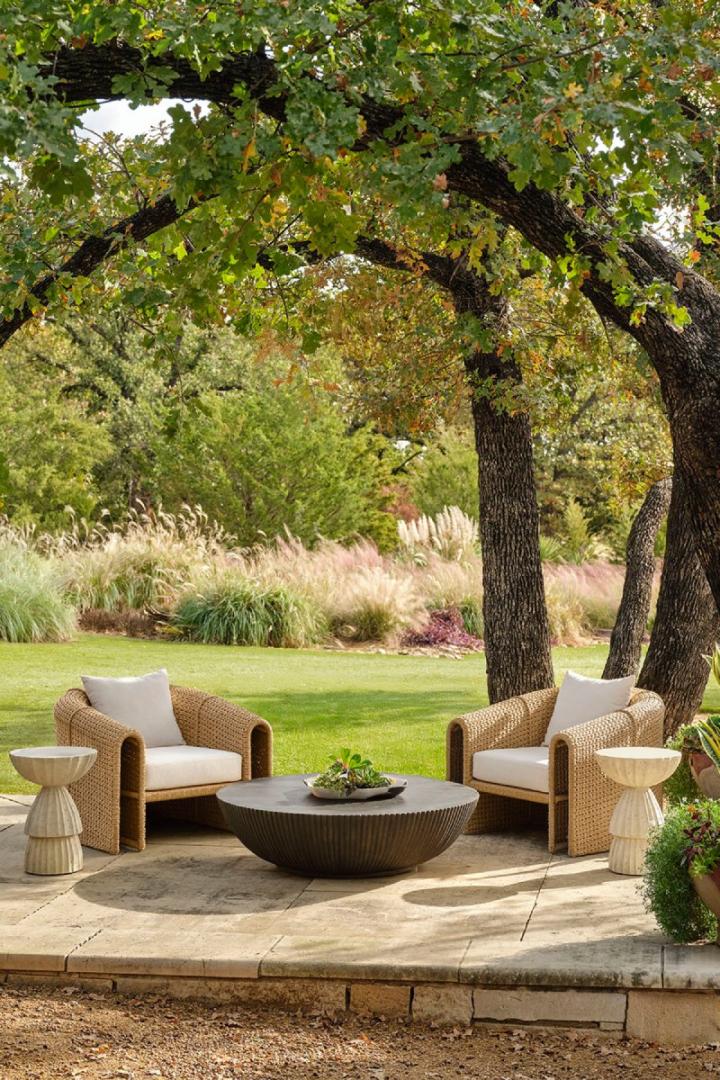
Made with UV-resistant polyethylene, premium-quality fiber furniture is fully weatherproof. When woven in a rattan-like pattern over an aluminum frame, fibers capture the organic character of natural wicker without any of its vulnerabilities to moisture and sun, making it one of the more versatile options for luxury outdoor furniture.

Incorporating Natural Stone and Marble Outdoors
Stone and marble bring unmistakable material gravitas to outdoor settings. As tabletop surfaces, they resist heat, scratches, and daily wear. Marble introduces veining and tonal variation that no manufactured material can replicate, and while stone tabletops require periodic sealing to prevent moisture absorption, a properly maintained stone surface becomes one of the most enduring and beautiful investments in the space.
Choosing the Right Outdoor Seating and Dining Furniture
With the planning and material decisions in place, the focus shifts to individual pieces and how each one contributes to the comfort, scale, and visual coherence of the space as a whole.
Statement Lounge Chairs and Outdoor Sofas
In a luxury context, outdoor lounge seating should read as interior-quality furniture that happens to live outside. The sculptural quality of a piece matters as much as its comfort, a well-designed lounge chair with a confident silhouette creates visual intrigue and draws you in, while thoughtful cushion construction and generous proportions are what make you want to stay.
Anchor Pieces: Outdoor Dining Tables
A well-chosen piece from a broader outdoor dining furniture assortment can become the functional and visual heart of any entertaining space. Choose a size and shape calibrated to the scale of the patio and the number of regular diners, and look for refined architectural forms to elevate a casual meal into something more ceremonious.
The table sets the tone for everything around it, and deliberate material contrast in the accompanying chairs can deepen that story further: the warmth of a teak tabletop paired with clean-lined seating creates a layered material story.
High-Performance Luxury Outdoor Fabrics
Cushions and upholstered elements are among the most visible and most vulnerable components of any outdoor piece. But performance and beauty are no longer mutually exclusive in outdoor textiles:
Arteriors' pearl-hued outdoor performance boucle upholstery marries tactile warmth and weather-resistant durability, for patio seating that looks like it could live indoors.
Illuminating the Outdoors: The Role of IP-Rated Lighting
Lighting is one of the most transformative investments in any outdoor space, capable of extending the usability of a patio well into the evening and setting the tone for every gathering that happens there.
Layering Light for Ambiance and Safety
Professional outdoor lighting design relies on layering: ambient light that establishes overall illumination levels, task lighting that supports dining and conversation, and accent lighting that draws attention to architectural features or plantings.
IP-rated fixtures, designed to withstand moisture and particulates, are the only appropriate choice for any permanently mounted outdoor application. IP65 is generally considered the minimum standard for covered outdoor areas; fully exposed installations warrant that rating or higher.
Sculptural Outdoor Sconces and Pendants
Wall-mounted outdoor sconces flanking a gate, an entry, or a garden wall serve double duty as functional lighting and architectural detail, and when specified thoughtfully in hammered iron or matte black steel, they become part of the architecture rather than an afterthought.
Covered outdoor areas open up additional lighting possibilities: Sculptural pendants provide focused light over a dining table while contributing visual interest during the day.
Completing the Space with Outdoor Décor and Accessories
Just as in a well-appointed interior, outdoor accessories are what make an alfresco space feel truly complete rather than simply furnished.
Protecting Your Investment: Care and Maintenance for Luxury Furniture
Even the most performance-engineered outdoor furniture benefits from a consistent seasonal maintenance routine. At the start of each season, inspect powder-coat finishes for chips, examine woven panels for fraying, and assess cushions for mildew or fading.
For aluminum frames, a gentle wash with mild soap and water is sufficient. For teak, apply oil or a UV-protective sealer annually to maintain a warm color, or simply clean periodically if you prefer a silver-tone patina. Stone tabletops should be resealed once a year with a penetrating stone sealer. When inclement weather arises, store cushions indoors or inside a ventilated storage box and cover furniture with a breathable, weather-resistant material.
Sourcing Timelines: When Is the Best Time to Buy Patio Furniture?
Timing matters more than most people realize when sourcing luxury outdoor furniture, and planning ahead will help avoid the stress of a missed seasonal deadline.
Navigating Designer Lead Times for Spring and Summer Installs
Luxury furniture collections from trade brands often carry lead times of 8 to 14 weeks, extending to 16 weeks or more during peak spring ordering (February through April). If you want outdoor furniture installed and ready for June, finalize specifications and place orders no later than February.
For complex projects involving custom finishes or large volume orders, begin the sourcing conversation in November or December, and build in a 2-to-4-week buffer beyond the quoted lead time to account for shipping delays.

FAQs About Sourcing and Buying Outdoor Patio Furniture
How Do I Choose Outdoor Furniture for a Luxury Commercial or Hospitality Project?
Commercial projects call for contract-grade furniture with more rigorous structural testing, abrasion-resistant finishes, and higher double-rub count fabrics than residential specifications require. Look for manufacturers with a dedicated contract program, as these typically include enhanced warranties.
What Type of Patio Furniture Is the Most Weather Resistant for Coastal Homes?
Powder-coated aluminum and teak furniture are the most weather-resistant options for coastal homes. Avoid uncoated iron or steel, standard hardware, and any fabric not specifically rated for outdoor UV and moisture exposure.
Is Expensive Outdoor Furniture Worth It?
Premium outdoor furniture made from performance-engineered materials routinely lasts a decade or more, while inexpensive alternatives often need replacing within a few seasons.
What Should You Look for When Buying Outdoor Patio Furniture?
Start with material quality and weather resistance calibrated to your specific climate. Then, prioritize pieces that hold their own in the scale of your space and create cohesivity between indoors and out.