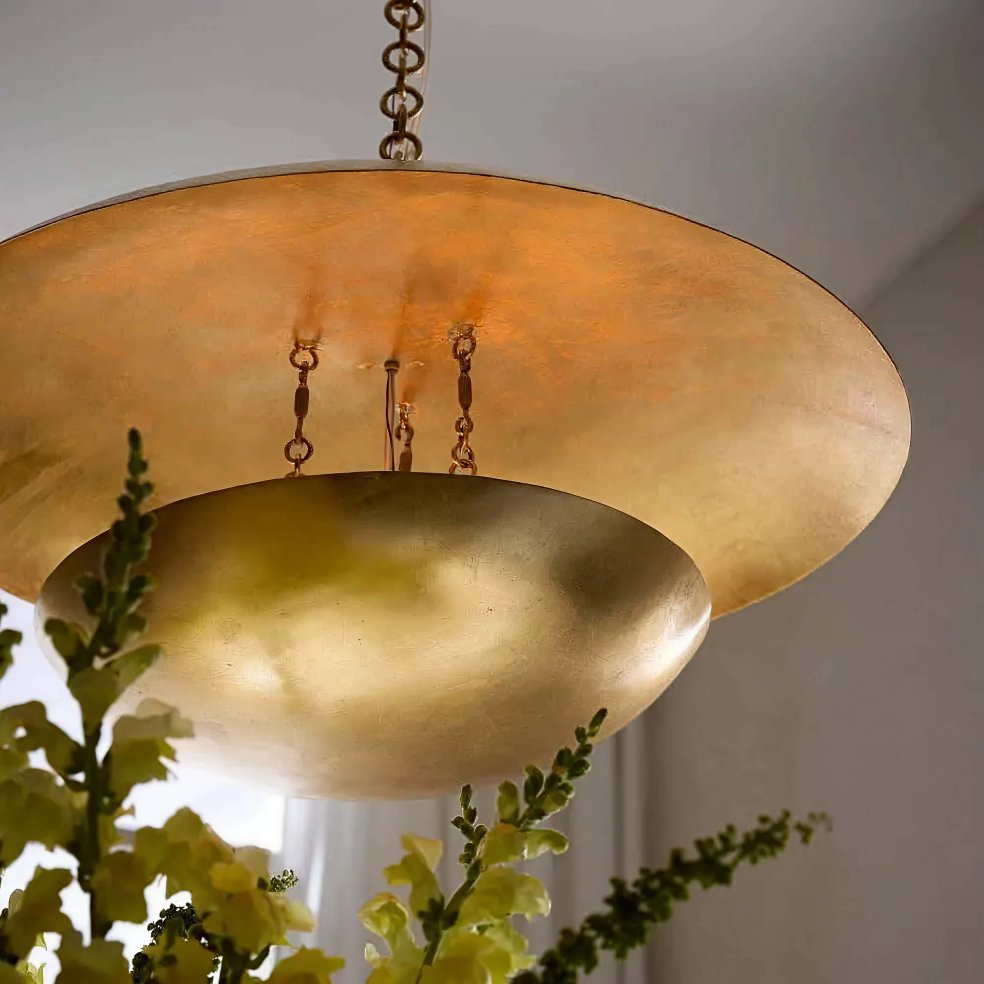
Design by @carriedelanyinteriors, photography by @lindsay_salazar_photography
Designing a compact kitchen requires restraint, but working within tight parameters doesn’t have to mean sacrificing style. In fact, lighting is one of the most effective ways to elevate a room without taking up any ground space. By selecting fixtures with proper proportions, high-quality light output, and sculptural presence, we’ve compiled the following small kitchen lighting ideas to create a functional and fashionable space.
What Is the Best Type of Lighting for a Small Kitchen?
When it comes to lighting for a small kitchen, every fixture must earn its place functionally and aesthetically. Understanding the ideal application for each type of fixture is the foundation for a scheme that performs beautifully at every hour of the day.
The Best Lighting Types at a Glance
The best lighting for a small kitchen draws from four fixture categories, each serving a specific role:
Pendants define the island or peninsula with warmth and personality. When scaled correctly, they deliver task light and design presence in a single gesture.
Wall sconces illuminate a kitchen’s perimeter, humanizing the space with layered warmth, which is particularly effective in galley kitchens where ceiling fixture options are limited.
Linear chandeliers replace two or three individual pendants with one clean horizontal form— architectural rather than decorative, and an elegant choice above a rectangular island.
Flush and semi-flush mounts are space savers when ceiling height rules out any hanging drop. The best examples read as sculptural objects rather than afterthoughts.
The Ideal Formula: Layered, Low-Profile, & Dimmable
The most successful small kitchen lighting layouts share three qualities. They layer ambient, task, and accent sources so no single fixture carries the full burden of illumination. They prioritize low-profile or wall-mounted lighting wherever possible, protecting the visual openness that the room depends on. Every circuit should run on a dimmer, giving the kitchen full range from bright midday functionality to warm, atmospheric evening light.

Design by @puritydesigns
Small Kitchen Lighting Layout: How to Layer Light Effectively
A thoughtful small kitchen lighting layout creates a hierarchy that makes a compact space feel larger, more refined, and more versatile. To get the layout right, work from the ceiling down: ambient base first, task zones second, accent and mood layers last.
Establishing the Ambient Base
As the foundation of a room’s lighting plan, ambient lighting provides even illumination, ensuring safe navigation and general visibility. In many modern small kitchens, recessed 4-inch or 6-inch downlights arranged in a grid, spaced 4 to 6 feet apart, are the standard. Flush-mount fixtures can also serve as a room’s primary ambient source. Pieces like Arteriors’ Glaze Large Flush Mount—a black steel base paired with an ivory crackle ceramic bowl and a trio of opal-frosted glass globes—demonstrate how a low-profile fixture can carry genuine material interest. Handcrafted and damp-rated, it casts a soft, flattering glow.
Task Lighting That Decorates
In a small kitchen, task lighting should simultaneously brighten prep zones and elevate the room’s overall aesthetic. Above the island, a sculptural pendant—such as Arteriors’ Heloise Pendant, with a classic conical shade and bronze steel frame—works double duty as task lighting and a design-forward focal point.
Curating Mood & Accent
Accent lighting has a profound effect on the way a room feels when you walk into it. Wall sconces are effective tools for setting the mood of a space by contributing warmth at the perimeter, framing architectural moments, and creating a tangible atmosphere. A compact sconce—such as Arteriors’ Simba Sconce with a linear LED concealed by antique-brass-finished steel—placed beside open shelving, flanking a range, or at the transition between kitchen and living space casts light in a direction that recessed fixtures can’t reach.
Best Lighting for a Small Kitchen by Fixture Type
Once the layering strategy is in place, fixture selection becomes a matter of matching the right form to each role. These fixture types each bring something distinct to a small kitchen, and the most compelling design schemes draw from more than one.
Sconce vs. Pendant: Which Saves More Space?
While both of these fixture types work well in a small kitchen, they serve different spatial purposes. Best used above kitchen islands, pendants occupy vertical space, so in rooms with 8-foot ceilings or lower, drop length and diameter must be managed carefully. Wall sconces carry zero ceiling load, making them a particularly strong choice in galley layouts where overhead real estate is limited.
Wall Sconces
When placed above or on either side of a kitchen sink window, sconces transform a purely functional zone into a thoughtful vignette. Sconces also work well at the entrance to an open-plan kitchen, contributing soft fill light along the perimeter wall without interrupting traffic flow. The Polaris Sconce is designed for this exact scenario. Featuring two frosted glass globes on antique brass arms, this sconce features dual-orientation mounting (vertical or horizontal) for added flexibility in tight spaces.

Design by @foxtailinteriors, photography by @emilyfollowillphotographer
Linear Suspension
A linear chandelier above a rectangular island is one of the cleanest moves in kitchen lighting—one fixture that mirrors the island’s geometry below. Linear suspensions read as architectural rather than ornamental and are particularly well-suited to kitchens with strong material palettes that don't need to compete with a complex fixture overhead.
For those drawn to a graphic sensibility, the Harrison Linear Chandelier, with opal-glass globes in a linear formation, introduces movement and material complexity while maintaining a clean horizontal silhouette.
Sculptural Flush Mounts & Pendants
Rather than defaulting to recessed cans in a small kitchen, consider installing sculptural flush mounts in multiples for high-impact visual presence. For example, a trio of Louisa Flush Mounts in a low-ceiling space read as a deliberate design decision rather than background infrastructure. Above the sink, the eye-catching Rex Pendant adds a celestial feel to one of the kitchen’s most-used zones.
Placement & Sizing: Getting the Proportions Right
Choosing the right fixture style is just the first step. Where a piece will be mounted and how its scale appears relative to the surrounding surface and sightlines determine whether the result reads as intentional or accidental. For a balanced and polished setup, follow these guidelines.
The Diameter Rule for Small Islands
Pendant diameter should be proportional to the island's width. A compact island 24 to 30 inches wide calls for pendants in the 6 to 8 inch range; a wider 36 to 42 inch island supports 10 to 12 inch pendants. When using two pendants, space them evenly along the island's length, with the outer fixture edges aligning loosely with the outer thirds of the surface below.
Island Lighting Height & Sightline Rules
The standard hanging height for pendants above a kitchen island is 30 to 36 inches from the countertop surface to the bottom of the fixture. This preserves sightlines across the island while keeping the light source close enough for meaningful task illumination. In rooms with ceilings above 9 feet, 40 inches is doable. When seated at the island, the fixture’s bottom should sit above eye level—a pendant that crosses the sightline becomes a visual obstruction regardless of its quality.

Design by @benjaminjohnstondesig, Builder by@thompsoncustomhomes
Photography by @juliesoefer, Styling by @jbheditorial
Recommended Mounting Heights at a Glance
Use this chart as a starting point for finding the right hanging height for your small-kitchen lighting.
|
Fixture Type |
Mounting Height |
|
Pendant over island |
30–36" above countertop |
|
Linear suspension over island |
32–36" above countertop |
|
Pendant over dining nook |
28–34" above tabletop |
|
Wall sconce (general) |
60–66" from floor |
|
Sconce flanking window |
Centered at 72–78" from floor |
|
Under-cabinet light |
2–4" from front cabinet edge |
The Sink Vignette
A kitchen sink positioned against a wall is prime real estate for a vignette. Flank an above-sink window with a pair of sconces—mounted approximately 24 inches apart on center at eye height—to create visual balance and practical lighting when the sconces become the room’s anchor lighting in the evening. Or position a semi-flush mount fixture on the ceiling above the sink to draw the eye upward. For kitchens without a window above the sink, a single pendant hung 36 to 40 inches above the basin delivers the same quality of presence with a slightly more vertical composition.
Dining Nooks & Banquettes
A built-in banquette adjacent to the kitchen benefits from its own dedicated light source, typically an oversized pendant hung 28 to 34 inches above the tabletop. This defines the dining space from the kitchen space and allows each zone to function independently.
Small Kitchen Lighting Ideas That Maximize Style & Space
Beyond the technical framework, there are a handful of design moves that consistently maximize impact in compact kitchens—amplifying light, creating the illusion of space, and bringing a level of editorial intention that elevates the space.
Vertical Silhouettes
In a space where ceiling height is limited, fixtures with vertical silhouettes make intuitive design sense. A tall, narrow pendant draws the eye upward, elongating perceived height and creating a sense of lift without demanding square footage. Arteriors' collection includes pendants with narrow cylindrical forms in hammered metals and handblown glass that deliver exactly this effect: substantial visual presence without horizontal spread.
The Single Statement Piece
One high-impact fixture can do more for a small kitchen's design identity than a collection of modest ones. When chosen with conviction and installed at the correct scale, a sculptural flush mount at the ceiling center, a single linear chandelier over the island, or an oversized pendant at the sink can all serve as the room’s focal point. The key is restraint: when you commit to a statement piece, the surrounding fixtures should support the composition, not compete with it.
Mirrored & Metallic Finishes
Reflective surfaces amplify light in a small space. Fixtures in polished nickel, burnished brass, or antique gold bounce light off cabinets, countertops, and tile in a way that makes the room feel more luminous than its footprint suggests. Arteriors' finish range spans the full spectrum of refined metallics—from antique brass to vintage silver—making it easy to align a fixture to the kitchen's existing hardware palette.
A framed mirror on a kitchen wall provides the same effect, reflecting both natural and artificial light to expand the room's perceived depth. Arteriors' mirror collection, featuring frames in aged brass, iron, and mixed metals, offers options well-suited for a design-savvy cookspace.

Design by @stephaniekrausdesigns, Photography by @mcbecks_pix, Photo Styling by @kristihunter, Architectecture by @oskdesignpartners, Custom Build by @achristavest_home_builders
Small Kitchen Lighting Mistakes to Avoid
Compact kitchens leave little room for lighting missteps, but the most common ones are also the most avoidable. Knowing what to watch for before you purchase saves both time and budget.
Ignoring Dimmers
Dimmers are essential to making a kitchen’s atmosphere more flexible and dynamic. The same space that needs bright, even light for morning prep should settle into a warm glow by evening. Dimmers on every circuit make this possible without changing a single bulb. Confirm that your chosen fixtures and bulbs are dimmer-compatible before purchasing, particularly with LED sources.
Over-Scaling the Fixture
A fixture that’s too big dominates the space rather than anchoring it, eliminating the visual breathing room that makes the space feel deliberate. The diameter rule for pendants depends on the space it occupies: a fixture scaled for an open-plan kitchen will overwhelm a galley. When uncertain, size down. A fixture's quality of finish and form carries the room; its diameter should complement the space, not consume it.

Design by @klinteriors, photography by @amybartlam
Frequently Asked Questions
Are LED Lights Suitable for Small Kitchens?
LEDs are ideal: energy-efficient, long-lasting, fully dimmable, and available in 2700K or 3000K to suit any design palette.
Where Should Lights Be Placed in a Small Kitchen?
Install flush mount fixtures across the ceiling for ambient coverage, and a pendant or sconce above the sink or island as a focal point. Each zone operates on its own dimmer.
Can I Use a Chandelier in a Galley Kitchen?
Yes. A flush or semi-flush chandelier with a narrow profile fits beautifully and delivers meaningful design presence. Scale and ceiling clearance determine viability — the fixture's footprint is what matters, not its style category.