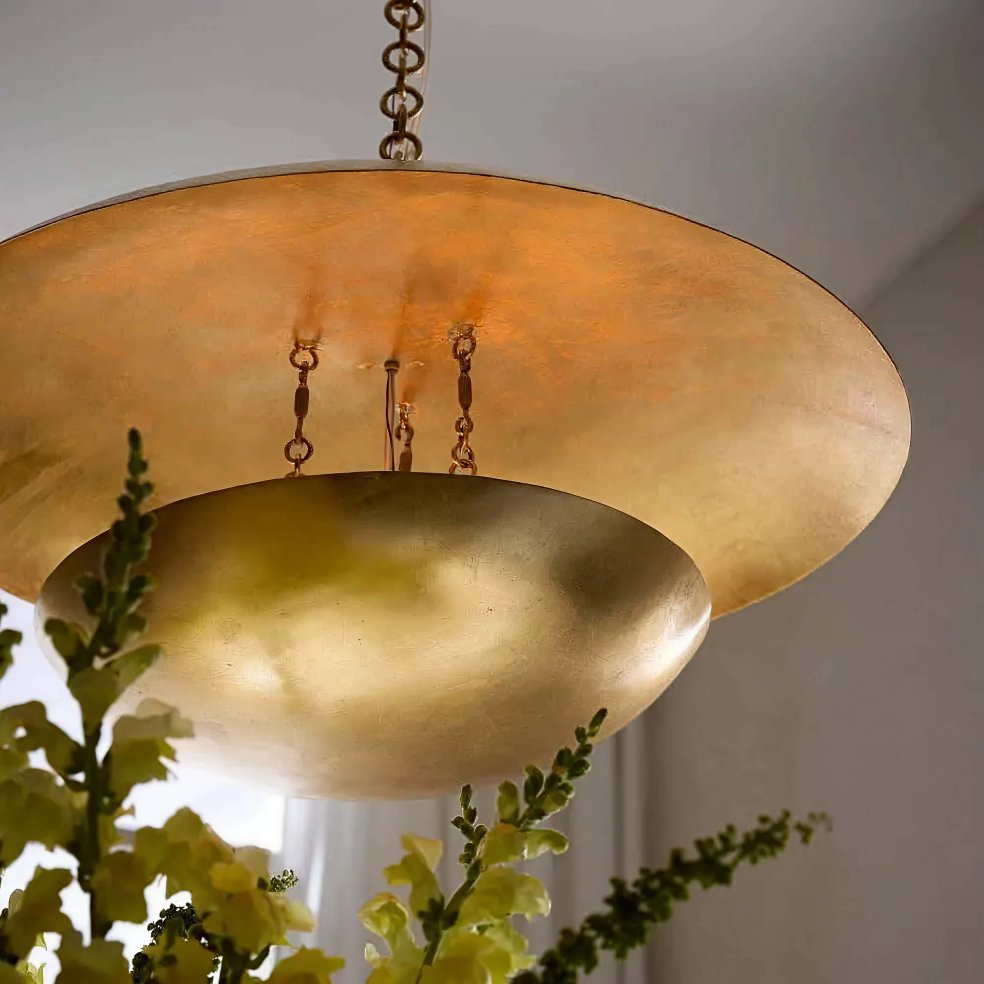
Design by @nashdesigngroup, photography by @christopherstark
Lighting shapes how we experience a room long before we consciously notice it. A space can be beautifully furnished and thoughtfully decorated, yet still feel wrong: too flat, too bright in the wrong places, too dim where it matters most. Linear lighting has emerged as one of the most compelling solutions to this, offering clean, balanced illumination that's as much an architectural statement as it is a functional one. A linear chandelier brings this principle overhead, redefining what a centerpiece fixture can be.
What Is Linear Lighting?
Linear lighting refers to any lighting system or fixture in which the light source or the overall form follows an elongated, straight line rather than radiating outward from a single central point. They commonly extend along a horizontal axis, working well above a rectangular or oval dining table, kitchen island, or spanning the length of a corridor.
While linear lighting covers a wide range of fixture types, from suspended chandeliers with multiple bulbs aligned along a metal frame to minimalist bar pendants, the category is united by proportion and directionality. The consistent elongated form mirrors the geometry of the spaces and furnishings beneath it, creating a sense of visual alignment and design cohesion.
What Is a Linear Light Fixture?
A linear light fixture is the physical object through which linear lighting takes form. This includes the quality of materials, the weight of hardware, and the precision of joinery, all of which distinguish a fixture that merely functions from one that elevates a room. Choosing a linear light fixture is less of a lighting decision than an architectural one. It is the designed object you select, specify, and install.
Linear light fixtures vary considerably in construction and intent. Some are engineered for seamless integration, and others are conceived as statement pieces (sculptural aged brass chandeliers or hand-blown glass that command attention the moment you enter a room). What unifies them is their governing geometry: an elongated horizontal form that draws the eye across a space rather than pulling it upward to a single focal point.

Design by @jackiedicaradesign, photography by @kielyramosphoto, build by @ratcliffeandblack
What Does Linear Mean in Lighting?
In lighting design, "linear" describes a fixture's primary axis of extension. A linear fixture is longer than it is wide, typically oriented horizontally, and its light sources (whether bulbs, globes, or integrated LEDs) are distributed along that horizontal span rather than clustered at a center point.
Linear vs. Point-Source Lighting
Point-source lighting emanates from a single concentrated origin (think: a pendant with one bulb at its center, a recessed can light, or a table lamp). It creates pools of light with visible gradients that brighten at the center and gradually fade out. Point sources are excellent for creating drama and focal points, but they can leave gaps in coverage and cast uneven shadows over longer surfaces.
How Linear Fixtures Create Continuous Illumination
With multiple bulbs distributed along a horizontal frame or one long LED strip, linear fixtures spread illumination evenly along the length of the fixture's footprint. The result is a wash of light that follows the contours of a dining table or a work surface beneath it. Shadows are softer, coverage is more consistent, and the overall effect tends to feel more considered and composed.
That said, linear and point-source fixtures are not competing categories; they are complementary tools in a well-layered lighting plan. Many designers pair a linear chandelier above a dining table with recessed downlights or wall sconces elsewhere in the room to create depth and dimension.
What Linear Lighting Does in Interior Design
The fixtures you choose determine not just how well a room is lit, but how it feels to move through, dine in, or gather within. Linear lighting, in particular, works across multiple layers of a well-designed interior, serving as an ambient foundation and focal point all at once.
Ambient Lighting: Creating a Balanced Foundation
Think of ambient lighting as the foundational layer of a well-designed space. Its broad-reaching illumination allows people to see and move comfortably throughout a room. A linear chandelier positioned at the center of a dining room or kitchen can serve as a primary ambient source, casting light broadly across the room's main gathering area.
Because linear fixtures distribute light along their full span, they tend to produce a more balanced ambient quality than single-point ceiling fixtures. The Layla Linear Chandelier showcases cascading fine brass chains, making it an elegant addition to your space. The horizontal sweep of linear chandeliers should align naturally with the space's proportions, delivering light where it is most needed.
Task Lighting: Precision for Kitchens and Workspaces
Task lighting directs illumination at a specific work surface: a kitchen island, an office desk, or a study. Our Smyth Linear Chandelier can be configured to match the needs of your space, while delivering optimum lighting coverage with a vintage-inspired feel.
In kitchens, a linear chandelier suspended above an island acts as both task and ambient lighting. The fixture provides working light for the surface beneath it while also contributing to the room's overall brightness and aesthetic presence. For home offices and studio spaces, linear fixtures with pivoting or adjustable light sources offer a degree of directional control that fixed designs cannot match.
Accent Lighting: Highlighting Architecture and Art
Accent lighting draws attention to specific elements of a room, like a piece of artwork, an interesting architectural feature, or an entry table vignette. While linear fixtures are most commonly associated with ambient and task functions, they can serve an accent role by positioning the fixture to graze a wall or shelf with directed light.
A beautifully designed linear chandelier, such as the Christelle Sconce, can also function as its own kind of accent piece, drawing the eye upward and creating a ceiling-level focal point. Sculptural or striking linear lighting transforms the overhead zone of a room from a functional necessity into a deliberate design statement.

Design by jsdwellings, Styling by jocostyling, Photography by laurenloganphotography
Types of Linear Lighting Fixtures
Linear fixtures come in several distinct configurations, each suited to different architectural styles and design intentions. Understanding the differences helps in choosing the right solution for a given space.
Suspended Multi-Light Chandeliers
Not all linear lighting is confined to a single horizontal plane. Multi-drop pendants take the core logic of linear illumination and introduce a vertical dimension, suspending individual light elements at varying heights to create a layered, three-dimensional composition overhead.
The Melt Chandelier is a compelling example of how a drop design can transcend conventional fixtures. The series of clear cast glass drops appears caught in mid-motion, dripping delicately from antique brass-plated iron hardware. The effect is simultaneously organic, architectural, and visually striking.
What distinguishes multi-drop configurations is their inherent flexibility. Multiple pieces can be combined and arranged at varying heights for installations, making the format suited to double-height entries, open stairwells, or any space where vertical drama is a design priority. The ceiling caps and mounts can be repositioned to manipulate the width and the spread of the overall composition, giving designers meaningful control over the fixture's footprint.
Integrated LED Linear Systems
Integrated LED linear systems incorporate LED technology directly into the fixture's structure, eliminating the need for separate bulbs and creating a sleek and seamless form. While these systems are common in architectural and commercial contexts, where long, uninterrupted runs of light are needed above workstations, corridors, or retail displays, integrated LED technology can also be found in minimalistic decorative chandeliers used in residential design.
Where Linear Lighting Works Best
Linear lighting’s sharp geometry makes it a natural fit for some spaces and a mismatch for others. The following rooms and conditions are where the form performs at its best.
Kitchen Islands and Dining Tables
The most natural home for a linear chandelier is directly above a rectangular surface, most commonly a kitchen island or a dining table. The proportional relationship of a long fixture above a long surface creates visual balance that feels resolved and complete.
A linear chandelier above a dining table or a kitchen-island seating area also performs a social function by defining the gathering zone. The space and its occupants are pulled together beneath a shared canopy of light for a subtly intimate feel.
Hallways and Entryways
In long hallways and elongated entryways, linear fixtures create a sense of procession and arrival. Their straightaway form leads the eye down the length of the corridor and keeps the flow of the room moving forward, all while clearly illuminating the path ahead.
Offices and Hospitality Spaces
Linear lighting has long been a staple of commercial and hospitality design for its ability to effectively light wide-open spaces where people mingle and gather. Placed in a boardroom or lobby, a linear fixture provides even, glare-reduced task lighting across the entire space. A dramatic linear chandelier has the ability to create a focal point that signals the importance and purpose of the interior.
Planning Linear Lighting in Your Home
Selecting the right linear lighting goes beyond aesthetic preferences. Scale, hanging height, and light quality each play a role in determining whether a fixture feels at home in your space.
Choosing the Right Fixture Length and Scale
Scale is the most common, and the most consequential, mistake in linear lighting. A fixture that is too short for the table or island beneath it will look tentative and out of proportion, while a fixture that extends beyond the table's edges looks awkward and, in high-traffic areas, can become a physical hazard.
The general principle: the fixture length should bear a clear proportional relationship to the surface or space below it. For a dining table or kitchen island, aim for a piece that is 6–12 inches shorter than the table on each end, leaving roughly a foot of breathing room on either side. For hallways and entryways, consider placing multiple fixtures in a series rather than a single unit that falls short.
Room ceiling height also influences scale. Higher ceilings can accommodate more substantial fixtures with greater visual mass; lower ceilings call for more slender, elongated forms that maintain proportional elegance without overwhelming the space.

Design by @nataliemgoulddesign, photography by @sumairaamberphoto
Hanging height affects both the functional performance and the visual composition of a linear fixture. Hang a chandelier too high above a dining table and it loses its anchoring effect on the space; hang it too low and it becomes a visual obstacle and a distraction.
When in doubt, follow these standard recommendations: Hang fixtures 30 to 36 inches above a dining table, with the lower end of this range preferred for more intimate rooms and the higher end for rooms with cathedral or vaulted ceilings. For kitchen islands, 36 to 42 inches of clearance provides effective task lighting. And for high-traffic walkthroughs like hallways and foyers, the bottom of the fixture should hang at least seven feet from the floor.
When using fixtures with adjustable-length downrods or additional pipe extensions (a feature offered across the Arteriors linear collection), these clearances can be fine-tuned during installation to achieve the ideal visual and functional position.
Understanding Lumens, CRI, and Color Temperature
These three technical specifications express the quality of light that a fixture delivers.
Lumens measure the total amount of light output. For dining and living spaces, 1,500 to 3,000 lumens from a central fixture is generally appropriate, with the precise amount depending on room size and the presence of supplementary lighting. For task-oriented applications like kitchen islands, higher lumen output (in the 3,000 to 4,500 range) ensures adequate working illumination.
Color Rendering Index (CRI) measures how accurately a light source renders the colors of objects compared to natural daylight. A CRI of 80 or above is the baseline for residential spaces; 90 and above is preferred for areas where accurate color perception matters, including kitchens and areas where art is displayed.
Color temperature, measured in Kelvin, describes the warmth or coolness of the light. For residential spaces, 2700K to 3000K produces a warm, inviting tone that feels comfortable. Cooler temperatures in the 3500K to 4000K range can be appropriate for task-intensive workspaces where clarity and alertness are priorities.
Linear Lighting vs Traditional Fixtures
Compared to conventional chandelier forms, linear fixtures operate by a different set of spatial and functional principles. The distinctions go beyond aesthetics and touch on how light behaves, how a space is perceived, and how efficiently a fixture works over time.
Spatial Efficiency and Minimalist Form
Traditional chandeliers with tiered arms radiating outward from a central core, multiple tiers of candelabra lights, and elaborate decorative frameworks are conceived around a vertical axis. They read as formal and centralized, designed to fill a defined volume and command attention from all angles.
Linear fixtures operate on a different spatial logic. They extend horizontally rather than vertically, occupying a narrow slice of the ceiling plane rather than a voluminous zone. In rooms with lower ceilings, a linear chandelier delivers the visual presence and the lighting performance of a substantial fixture while maintaining overhead clearance. In rooms of any height, the horizontal emphasis creates a contemporary aesthetic quality and evokes streamlined, architectural confidence.
Light Distribution and Coverage
For an elongated surface, linear fixtures are more likely to distribute even, balanced light than a traditional chandelier. Think of it: A traditional point-source chandelier hung above the center of a 10-foot-long dining table delivers its best light directly below the fixture, spotlighting guests seated at the center of the table and leaving those at the ends of the table in more shadowy light. An appropriately scaled linear chandelier delivers light across the full span of the same dining table, ensuring that the entire surface is consistently illuminated.
Proper light distribution and coverage has the power to shape the social dynamic of a dining experience, encouraging conversation and connection across the full length of the table.
Energy Efficiency and Longevity
LED-compatible and integrated LED fixtures have made the linear lighting category among the most energy-efficient options in decorative lighting. LED sources consume significantly less wattage than incandescent equivalents for the same lumen output, reducing operating costs over the life of the fixture. They also generate less heat, which is a practical benefit in dining rooms and kitchens where thermal comfort matters.
Integrated LED systems eliminate bulb replacement entirely, and the light source is engineered to last for tens of thousands of hours of operation. For fixtures installed in high-ceilinged spaces where bulb replacement would require ladders or professional service, this longevity represents a meaningful practical advantage beyond the energy savings alone.

Design by @7b_design, photography by @julie.leffell.photo
Why Designers Choose Arteriors Linear Lighting
Among the many linear lighting options available, Arteriors offers a collection where material craft, sculptural ambition, and technical precision are considered equally important.
Sculptural Design That Functions as Art
Every Arteriors piece is designed as an object of sculptural interest first and a lighting instrument second. This philosophy is most visible in our linear chandelier collection, where each fixture carries a narrative that extends beyond function.
Take the Nova Alabaster Linear Chandelier, for example. Taking its geometric cues from lunar forms, the piece features curved alabaster segments with iron rods in a composition that references both natural phenomena and contemporary art. Like all Arteriors fixtures, the chandelier possesses a striking silhouette that’s meant to be noticed.
Artisan Materials and Luxury Finishes
The material vocabulary of the Arteriors linear collection sets it apart from mass-market linear lighting. Where commodity fixtures default to painted steel and injection-molded glass, Arteriors works with vintage brass-plated iron, English bronze-plated iron, handcrafted glass in smoky finishes, natural alabaster, and fluted globe shades. Each fixture is built with the material intelligence of fine furniture or jewelry, an approach that holds up to both daily use and evolving design sensibilities.
The Kinlee Linear Chandelier exemplifies this material richness: Its antique brass iron frame supports a collage of handcrafted glass discs (clear hammered, smoke hammered, and smoke luster etched), creating a layered luminosity that changes depending on the angle of view and the intensity of the light.
Integrated Technology with Architectural Presence
The best linear chandeliers marry advanced technology with enduring aesthetic presence. Early LED fixtures often sacrificed visual warmth for energy efficiency, producing light that felt clinical and cold, and integrated systems sometimes looked utilitarian in a way that undermined their decorative ambition.
Arteriors addresses this tension by embedding state-of-the-art technology within commanding architectural forms. The Tenzin Linear Chandelier integrates LED technology into an eye-catching structure reminiscent of beads strung along a chord. The technology disappears into the design, leaving only the warm glow of opal glass orbs and the quiet authority of the English bronze iron frame.
The Arteriors lighting collection also offers a variety of features for unparalleled flexibility. Damp-rated lighting can be used in humid environments like bathrooms and indoor-outdoor spaces, pipe extensions create adjustability in hanging height, and compatibility with standard dimmer systems allows dynamic functionality throughout the day.

Design by PRISTINE INTERIORS
Frequently Asked Questions
What Does Linear Lighting Mean?
Linear lighting refers to any fixture or system in which the light source and overall form extend along a horizontal axis rather than radiating from a single central point.
What Is a Linear Light Fixture Used For?
Linear fixtures can serve all three layers of a well-designed lighting plan. Linear fixtures’ light coverage tends to be even and consistent, which makes them practical choices in spaces where both performance and visual presence are required.
Where Are Linear Lights Most Commonly Used?
Linear lights are most commonly used above a kitchen island or a rectangular dining table, but they also work well in elongated hallways and entryways.
How High Should a Linear Pendant Be Hung?
As a general rule, position the bottom of the fixture approximately 30 to 36 inches above a dining table or kitchen island.
Is Linear Lighting Dimmable?
Most decorative linear chandeliers are fully compatible with standard dimmer switches, and many integrated LED fixtures are engineered specifically with dimmability in mind.