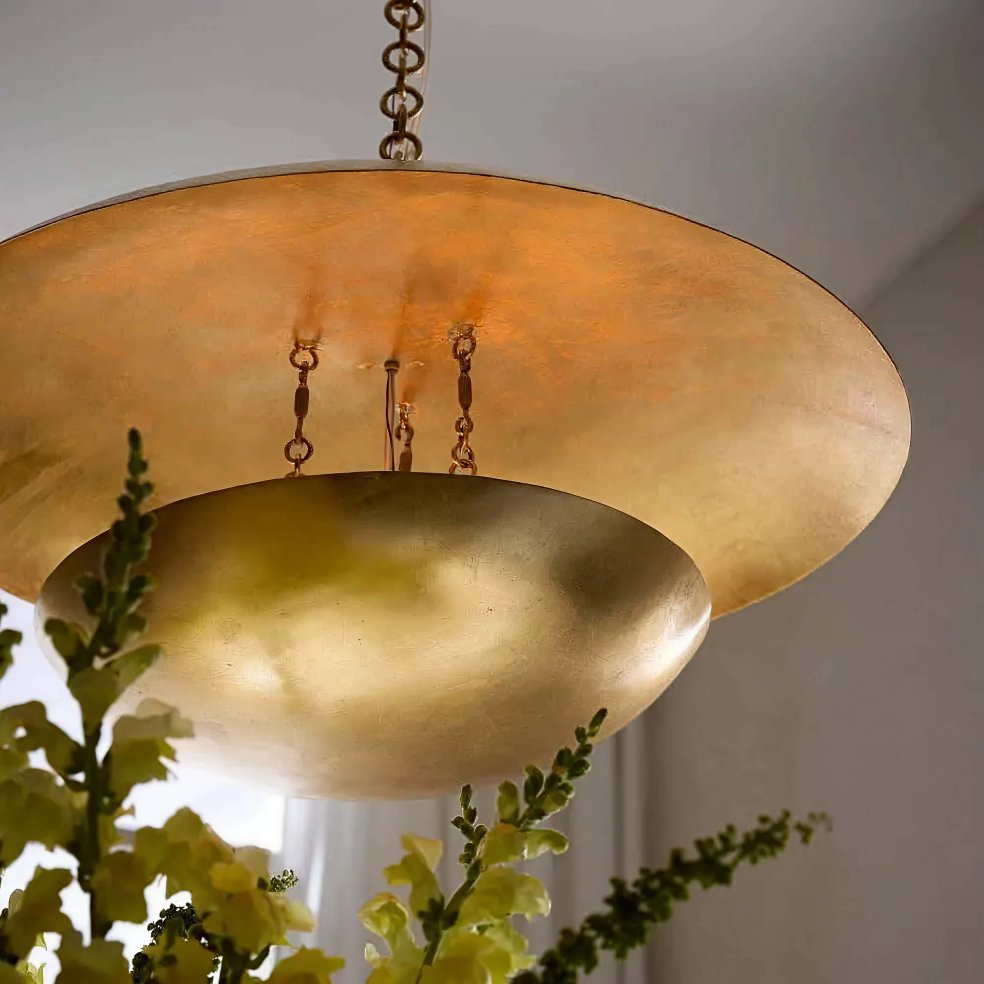
Design: @tracymorrisdesign
Photographer @anice_hoachlander
Architect: @sdk_arch
Builder: @mbrg_llc
With the right interior lighting, a compact living room can feel much more expansive than its actual square footage. The fixtures you choose, where you place them, and how many layers you build all have an impact on how big a room looks and feels. From statement lighting to low-profile sconces, these small living room lighting ideas will help you find the right fit for your space.
What Lighting Is Best for Small Living Rooms?
The best lighting for small living rooms favors smaller silhouettes, wall-mounted fixtures, and ceiling lighting, since all three keep the floor clear of clutter. From there, the right plan layers three types of light: ambient light for overall brightness, task light for reading and activities, and accent light for depth and visual interest.
Ambient light is your overhead or general source, typically a pendant or flush mount that fills the room with a baseline level of illumination. Task light supports specific activities, like the glow of a table lamp beside a reading chair. Accent light adds atmosphere and dimension, drawing the eye toward art, a mirror, or an architectural feature.

Design @ginarachelledesign
Build @beamconstructionsf
Styling @storiahome
Photography @sencreativeco
Small Living Room Lighting Ideas Designers Love
Once you understand the three-layer framework, it's easier to choose specific fixtures that work within a compact footprint. These small living room lighting ideas, favored by designers, balance function and polished style.
1. Use Wall Sconces to Free Up Surface Space
Floor and table space is precious in a small living room. Mounted at eye level beside a sofa or flanking a media console, wall sconces provide task or accent light without taking up an inch of your floor plan. Available in artistic, sculptural silhouettes, sconces also add a layer of visual interest to the wall.
2. Add a Sculptural Pendant
A sculptural pendant light does for a small living room what a chandelier does for a dining room. It adds visual interest and signals the room's central focal point without taking up an inch of floor space. Look for an open or perforated silhouette that lets light filter through, rather than a solid shade that reads heavy from below.
3. Brighten Corners With Floor Lamps
Corners are where small living rooms tend to go dark, since overhead fixtures rarely reach them and most furniture gets pushed toward the center. A slim floor lamp tucked into an underused corner adds both light and a sense of height, pulling the eye upward and making the whole room feel taller.

Design @luluhome.alana @luluhome.cami
Photography @pauljohnsonphotography
4. Reflect and Multiply Light With Mirrors
Positioning a decorative wall mirror across from a window or a light source bounces illumination back into the room rather than letting it dead-end against a wall. The effect multiplies the room’s existing light and gives the room more visual depth.
5. Choose One Oversized Statement Fixture
While it may feel counterintuitive, one well-scaled, oversized fixture often reads better in a small room than several small ones scattered around. A single statement piece gives the eye one place to land, while a handful of smaller fixtures can compete with each other and make the room feel busy.

Design by @casamarcelo.co
Styling: @foxobject
Select decor: @themckenzieshoppe
Movers: @upscalemoversusa
Photography by @philmansfieldphotography
6. Add Dimmers and Smart Control
Dimmers let a single fixture do double duty, shifting from bright, functional light during the day to a softer glow in the evening. That flexibility tends to matter more in a small room, where you likely can't fit a dozen different lighting zones, than in a sprawling open floor plan.
7. Layer Table Lamps on Consoles and Side Tables
A pair of table lamps on a console or side table adds warmth at a human scale, lower and softer than an overhead source. Keep the scale proportional to the surface beneath them, since an oversized lamp on a narrow console will skew the visual balance of the room.
8. Wash the Walls to Push Them Back
Lighting that washes a wall from top to bottom, rather than pooling in the center of the room, makes the boundaries of a small space feel less defined. By making the walls visually recede, this technique results in a room that feels more spacious and open.
9. Pick Warm Bulbs for Depth
Warm bulbs in the 2700 to 3000 Kelvin range create the kind of glow that feels inviting rather than clinical. Cooler light can flatten a small room visually, while warmer tones add the dimension and depth that make a compact space feel finished.
Small Living Room Ceiling Lighting Ideas
Ceiling fixtures carry extra responsibility in a small living room, since they're often the only source of true ambient light. These small living room ceiling lighting ideas depend largely on how much vertical clearance you're working with.
10. Flush and Semi-Flush Mounts
In rooms with eight-foot ceilings or lower, flush and semi-flush mounts hug close to the ceiling without sacrificing visual interest. Look for a fixture with an interesting texture or a sculptural silhouette to make a design statement that draws the eye upward.
11. Small Chandeliers and Pendants
Chandeliers aren’t only for grand foyers. A scaled-down designer chandelier or a cluster of small pendants can bring a sense of occasion to a compact living room without overwhelming the small space.
12. Best Lighting for Small Living Rooms With Low Ceilings
The best lighting for small living rooms with low ceilings are fixtures that hug the room’s surfaces (think: flush-mount ceiling lighting, wall-mounted sconces, and decorative table lamps). Save longer-drop pendants and chandeliers for rooms where the fixture can maintain comfortable head clearance and remain proportionate to the ceiling height.
Choosing Statement Lighting Without Overwhelming the Room
When chosen carefully, a statement fixture can transform a small living room. The key? Mastering the scale, shape, and finish for a fixture that anchors a room rather than crowds it.
13. Get the Scale Right
To find the right-size statement piece for your space, add the room's length and width in feet and use that number in inches as a rough target for fixture diameter. A 10x12-foot living room would suggest a fixture around 22 inches across, though you can adjust based on ceiling height and how much visual weight the fixture needs to carry.
14. Get the Shape and Silhouette Right
An open, airy silhouette, such as a slim metal framework or a fabric shade, tends to feel lighter in a small room than a solid, heavy piece. If you're drawn to a more substantial shape, balance its visual weight by keeping the rest of the room's lighting simple and refined.
15. Use Material and Finish to Keep the Look Light
Glass, acrylic, and polished metals reflect and refract light, which keeps a fixture from reading as visually heavy even when it has real physical presence. Darker, matte finishes can still work in a small room, but they tend to feel more grounded and substantial, so use them more sparingly.

Design by @kuinteriordesign
Photography by @lifeunstillphotography
How to Make a Small Living Room Look Bigger With Lighting
Lighting can impact the perceived size of a room as much as the overall paint color or furniture arrangement. These two principles focus specifically on the optical tricks that make a small living room read larger than it measures.
16. Draw the Eye Upward
Fixtures that draw the eye toward the ceiling, like a tall floor lamp or an uplighting sconce, make a room's vertical dimension feel more generous than it actually is. The trick works because most people register a room's height almost as much as its square footage when judging whether a space feels small.

Interior design: @letecia.ellis.haywood
Build team: @fiftyseventhandseventh
Architecture: @robertdamedesigns
Photography: @parbengtsson1
Styling: @walkertexasstager
17. Light the Perimeter, Not Just the Center
A single central light source pools brightness in the middle of the room and leaves the edges in shadow, which makes the walls feel like they’re closing in. Light the edges instead—with sconces, lamps, or wall washes—to push the walls visually outward and make the whole footprint feel more open.
Small Living Room Lighting Mistakes to Avoid
Even a well-chosen fixture can underperform if it's paired with the wrong habits elsewhere in the room. Steer clear of these common small living room lighting mistakes.
Relying on a single overhead fixture
A ceiling light alone only covers the ambient layer, leaving task and accent light underdeveloped. Add at least one of each, even if both stay modest in scale.
Ignoring the walls
A small living room with no light source on the walls reads as one flat, evenly lit box. Wall sconces and lighting aimed at art break up that flatness, adding the shadow and depth that make a compact room feel layered instead of boxy.
Undersizing the main fixture
A pendant or chandelier scaled for a hallway floats awkwardly in the center of a living room and reads as an oversight rather than a design choice. Match the fixture's diameter to the room itself.
Using cool-temperature bulbs
Cool white bulbs can make a compact room feel sterile and even smaller, since they flatten shadows and contrast. Stick to warm bulbs in the 2700 to 3000 Kelvin range for a more dimensional (and inviting) glow.
Skipping dimmers
Fixed brightness locks a room into a single mood, which hinders a flex space that functions as a family room, a reading nook, and an entertaining space.
Bring Your Small Living Room Lighting Plan Together
The best home lighting ideas for small spaces come down to layering, scale, and finish. By creating a layered system of ambient, task, and accent light from fixtures that feel cohesive, a compact space can appear much bigger than it actually is.
A pendant, a pair of sconces, and a lamp that echo the same finish, material, or silhouette read as one considered plan rather than a handful of unrelated pieces. That sense of cohesion carries even more weight in a small space, where there's less square footage to absorb a mismatched mix of metals and shapes. Get the layers and the relationships between fixtures right, and even the most compact living room can feel as intentional as one twice its size.
Small Living Room Lighting FAQ
What Type of Lighting Makes a Small Living Room Look Bigger?
Wall sconces and floor lamps that light the perimeter will make a small living room feel larger, while statement ceiling lighting will draw the eye upward.
How Many Light Sources Should a Small Living Room Have?
Aim for at least three sources covering ambient, task, and accent light. Even a modest room benefits from layering rather than relying on one overhead fixture.
What Is the Best Lighting for a Small Living Room With Low Ceilings?
Flush mounts, semi-flush mounts, and wall-mounted fixtures work best under low ceilings, since they stay close to the surface without sacrificing vertical clearance.
Can You Put a Chandelier in a Small Living Room?
Yes. A well-scaled statement chandelier can give a small living room a strong focal point and may look more intentional than several smaller fixtures. Choose a design that suits the room’s ceiling height and provides comfortable clearance.
Should I Use Warm or Cool Light in a Small Living Room?
Warm light in the 2700 to 3000 Kelvin range generally feels more inviting in a small living room than cooler, clinical-feeling tones.
Where Should You Place Lamps in a Small Living Room?
Place lamps where you need task light, such as beside a reading chair, and keep the scale proportional to the surface they sit on.
Do Recessed Lights Work in a Small Living Room?
Recessed lights work well for general ambient light, but pair them with at least one accent or task source so the room doesn't feel flat.